Dental Emergency? Same-Day Appointments Until 10 PM — Call 0113 245 9004
Open 7 Days a Week — Until 10pm. Call 0113 245 9004

4.8

/

3,840 reviews

Whatsapp us

Scan the QR Code to chat with our staff via your smartphone.

Next

Restorations Leeds

Expert Dental Restorations & Repair Treatments in Leeds

Restorations Leeds

Rebuilding strength, function, and comfort

Restorative dentistry focuses on repairing and rebuilding teeth to restore their strength and function. Whether addressing damage, decay, or tooth loss, treatment is designed to protect your oral health and prevent further issues. At Clarendon Dental Spa, we deliver precise, considered care to bring your smile back to full health.

Dentist wearing a face mask and gloves using a dental microscope while treating a patient lying back in a dental chair.

Dental Bridges / Leeds

No movement, no compromise

  • A traditional bridge consists of artificial teeth (called pontics) fused between crowns that fit over the teeth adjacent to the gap (called abutment teeth). The abutment teeth are prepared (drilled down slightly), then precise impressions are taken. A lab crafts the bridge, which is cemented permanently in place at a second appointment.

  • Other bridge types include Maryland bonded bridges (which use wings bonded to the back of adjacent teeth, requiring less preparation), cantilever bridges (attached to only one neighbouring tooth, suitable in specific cases), and implant-supported bridges (which use implants instead of natural teeth as anchors).

Dentist wearing a face mask and gloves using a dental microscope while treating a patient lying back in a dental chair.

Dental Crowns / Leeds

Advanced crown restoration

  • A dental crown is a tooth-shaped cap that covers a damaged or weakened tooth completely, protecting what remains of the natural tooth structure.

  • Crowns are recommended when a tooth is too badly decayed for a filling to safely restore, after a root canal treatment (as root-canal-treated teeth are brittle and fracture-prone), for teeth with large fractures or cracks, for severely worn teeth, and sometimes for cosmetic improvement of discoloured or misshapen teeth. Modern crowns are typically made from zirconia (extremely strong, natural-looking), full-ceramic porcelain (most aesthetic), porcelain-fused-to-metal (very durable with tooth-coloured appearance), or gold (very traditional, excellent durability but visible).

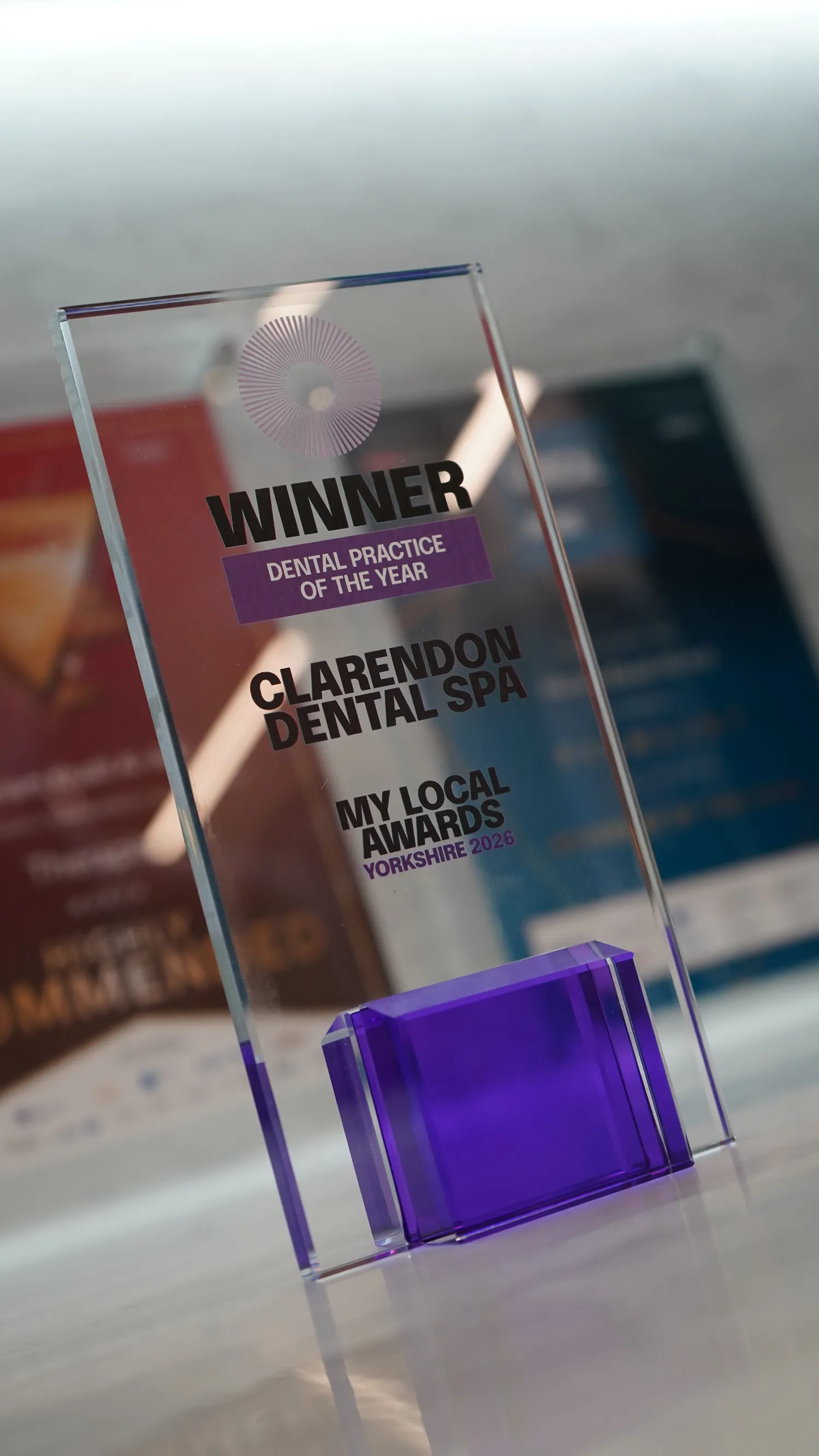
Clear glass award with a purple base reading Winner Dental Practice of the Year, Clarendon Dental Spa, My Local Awards Yorkshire 2026.

THE BRAND PATIENTS TRUST

Rated 5-stars from 3,840+ Google reviews

1

3

Dentist wearing a face mask and gloves using a dental microscope while treating a patient lying back in a dental chair.

Inlays & Onlays / Leeds

The elegant middle-ground restoration

  • For teeth with larger cavities or damage that’s too significant for a filling but doesn’t yet need a full crown, inlays and onlays offer a beautifully conservative middle-ground. Crafted from porcelain or composite in a dental lab, they’re precisely bonded to your tooth — restoring strength, function and appearance while preserving as much natural tooth as possible. Stronger than direct fillings. Less invasive than crowns. An elegant solution often underused in modern dentistry.

  • At Clarendons, we’re big believers in conservative restorative dentistry — keeping as much of your natural tooth as we can, for as long as possible. Inlays and onlays let us repair larger areas of damage without resorting to full-coverage crowns. The result is stronger, more durable restorations with natural appearance and genuinely long lifespan.

Dentist wearing a face mask and gloves using a dental microscope while treating a patient lying back in a dental chair.

Root Canals / Leeds

Saving your tooth from the inside out

  • A root canal treats infection or damage in the pulp — the soft tissue inside the tooth containing nerves and blood vessels. When this pulp becomes inflamed or infected (through deep decay, trauma or a cracked tooth), it can cause severe pain and eventually an abscess.

  • Root canal treatment removes the damaged pulp, cleans and disinfects the inside of the root canals, and seals them with a biocompatible material. A crown is usually placed afterwards to protect the treated tooth.

Dentist wearing a face mask and gloves using a dental microscope while treating a patient lying back in a dental chair.

White Fillings / Leeds

Modern fillings, better results

  • White fillings (also called composite or tooth-coloured fillings) use advanced resin materials bonded directly to your tooth to repair decay, chips or cracks. Unlike traditional metal (amalgam) fillings, composite chemically bonds to the tooth structure — meaning less drilling is needed, the tooth is strengthened rather than wedged open, and mercury isn’t involved.

  • Composite is placed in thin layers, each cured with a blue light, shaped to restore natural tooth anatomy, and polished to a smooth finish. Modern composites are durable enough for most routine cavities, including in back teeth, and typically last 7–10 years with proper care.

FAQs

Your questions about restorations, answered

FAQs / Restorations / Dental Bridges / Leeds

How do I clean under a bridge?

Brushing twice daily is essential but doesn’t reach beneath the bridge. You’ll need specialist tools: superfloss (a threaded floss that passes under the bridge), interdental brushes, or a water flosser. We’ll demonstrate proper technique at your fitting appointment and reinforce it at regular hygiene visits. Cleaning under the bridge takes 10–20 extra seconds a day but is crucial for long-term success.

Can I eat normally with a bridge?

Yes — bridges restore near-normal chewing function. Stick to softer foods for the first few days while you adjust, then gradually return to your normal diet. Very hard or sticky foods (hard caramels, ice cubes, extremely crunchy nuts) can damage bridges and are best avoided. Most patients forget they have a bridge once they’ve adapted.

How long does a dental bridge last?

Well-made bridges typically last 10–15 years, sometimes longer. Lifespan depends on oral hygiene (keeping the area beneath the bridge meticulously clean is essential), the health of abutment teeth, bite forces (grinding shortens lifespan), and material quality. Regular check-ups and hygiene visits maximise longevity.

Bridge vs implant — which is better?

Implants are generally the superior long-term solution — they don’t affect neighbouring teeth, they preserve bone, and they can last a lifetime. Bridges require preparing (drilling down) the teeth on either side, which can create problems 10–15 years later. However, bridges are faster (weeks vs months), less expensive upfront, and avoid surgery — making them the right choice when those factors matter, or when adjacent teeth already have large restorations that could serve as bridge abutments.

FAQs / Restorations / Dental Crowns / Leeds

What’s the best crown material?

Zirconia and full-ceramic porcelain are the two top choices for most cases. Zirconia is extremely strong and excellent for back teeth. Full-ceramic porcelain is slightly less strong but superior for aesthetics in front teeth. Porcelain-fused-to-metal is a good middle ground. Gold is rarely chosen now except for back molars with very high bite forces — it’s extremely durable but obviously visible. We’ll recommend the right material based on the tooth’s position and your preferences.

Are dental crowns painful to get?

No — not during the procedure. Local anaesthetic numbs the tooth completely while we prepare it, so you’ll feel pressure but no pain. Some tenderness for a few days afterwards is normal. If you’re nervous, sedation is available. Most patients are surprised at how comfortable the whole process is.

How long does a crown last?

Well-made crowns typically last 10–20 years, often longer. Lifespan depends on material (zirconia and porcelain are both excellent), the health of the underlying tooth, oral hygiene, bite forces (grinding shortens lifespan), and regular dental check-ups. Occasional re-cementation or replacement may be needed over decades.

When do I need a crown?

Crowns are recommended when: (1) a tooth is too damaged or decayed for a filling to safely restore; (2) after root canal treatment (to protect the now-brittle tooth); (3) for teeth with significant cracks or fractures; (4) for severely worn teeth from grinding; or (5) occasionally for cosmetic purposes when a veneer isn’t sufficient. At your consultation, we’ll assess whether a crown is the right option — sometimes a large filling, inlay or onlay will do the job more conservatively.

FAQs / Restorations / Inlays & Onlays / Leeds

Can inlays and onlays be used on front teeth?

Technically yes, but less commonly — front teeth are more often restored with composite fillings or veneers than with inlays/onlays. Inlays and onlays are most commonly used on back teeth (molars and premolars) where chewing forces are high and larger repairs are often needed. For front teeth, we’d typically recommend composite fillings for small repairs or veneers for larger aesthetic changes.

Do inlays and onlays hurt to get?

No. The procedure is carried out under local anaesthetic, so you’ll feel pressure but no pain. Some tenderness for a few days afterwards is normal (especially for deeper preparations). Most patients are surprised at how comfortable the whole process is. If you’re nervous, sedation is available.

How long do inlays and onlays last?

Porcelain inlays and onlays typically last 15–20 years, often longer. Composite versions typically last 7–10 years. Both can significantly outlast equivalent-sized fillings because they’re lab-crafted under ideal conditions and made from stronger materials. Regular check-ups monitor condition and catch any issues early.

Inlay/onlay vs filling vs crown — which do I need?

Depends on how much natural tooth is left. Small cavities: filling is the best option (fastest, cheapest, minimal preparation). Large cavities with healthy tooth structure still remaining: inlay or onlay preserves more tooth than a crown. Teeth with extensive damage, cracks, or after root canal treatment: a crown is usually needed for full coverage and protection. We’ll assess your specific tooth and recommend the most appropriate option.

FAQs / Restorations / Root Canals / Leeds

Do I really need a crown after a root canal?

In most cases, yes — especially for back teeth. Root-canal-treated teeth are weaker than natural teeth and vulnerable to fracture under chewing forces. A crown reinforces the tooth and dramatically improves its long-term survival. Skipping the crown is a false economy that often leads to tooth loss.

How long does a root-canal-treated tooth last?

A properly treated, properly restored tooth can last a lifetime. Studies show 85–97% success rates over 8+ years. The key is a thorough cleaning of all canals and a good crown afterwards to protect against fracture. Regular check-ups let us monitor the tooth for any long-term issues.

How long does root canal treatment take?

Most root canals are completed in one visit of 60–90 minutes. More complex cases (usually back molars with curved canals) may need two appointments. We’ll let you know what to expect at your consultation based on X-rays of the tooth.

Does a root canal hurt?

No — the procedure itself is comfortable. Local anaesthetic numbs the tooth completely, so you won’t feel pain during treatment. Most patients say it feels no different to having a filling. The painful part is the infection before treatment — root canal therapy is what ends the pain, not causes it.

FAQs / Restorations / White Fillings / Leeds

What happens if a filling falls out?

Don’t panic. Fillings occasionally come loose, especially older ones. Book an appointment as soon as possible — the exposed tooth is vulnerable to further decay, sensitivity and fracture. In the meantime, avoid chewing on that side and keep the area clean. Temporary filling materials from the pharmacy can cover the tooth for a day or two if there’s a gap before your appointment.

Can white fillings be used on back teeth?

Yes — absolutely. Modern composite materials are strong enough for most back-tooth cavities. For very large cavities or teeth under heavy grinding stress, we may recommend inlays, onlays or crowns for better longevity. But for the vast majority of back-tooth cavities, composite fillings are an excellent choice.

Do white fillings hurt to get?

Not during the procedure. We use effective local anaesthetic, so you’ll feel pressure but no pain while the filling is placed. Mild tenderness or sensitivity for 1—3 days after is normal (especially for deeper fillings). If sensitivity persists beyond a week or worsens, let us know — occasionally a filling needs minor adjustment.

How long do composite fillings last?

Typically 7–10 years with proper care, sometimes longer. Lifespan depends on filling size (smaller tends to last longer), location (front teeth have less chewing stress than back teeth), and how well you care for your teeth (hygiene, avoiding tooth-grinding). Regular check-ups catch any filling issues early, often letting us repair or refresh rather than fully replace.

Two bamboo toothbrushes and a green fern leaf on a wooden dish, surrounded by tropical leaves and a paper bag on a peach background.

discover our award winning clinic

Visit Clarendons