Next
Next

From £395
See our price list for full details
Oral surgery at Clarendon Dental Spa in Leeds covers wisdom tooth removal, surgical and simple tooth extractions, orthodontic surgery, cyst and soft-tissue procedures and oral cancer screening — carried out by our experienced oral surgery team under local anaesthetic, with sedation available for a calm, comfortable experience.
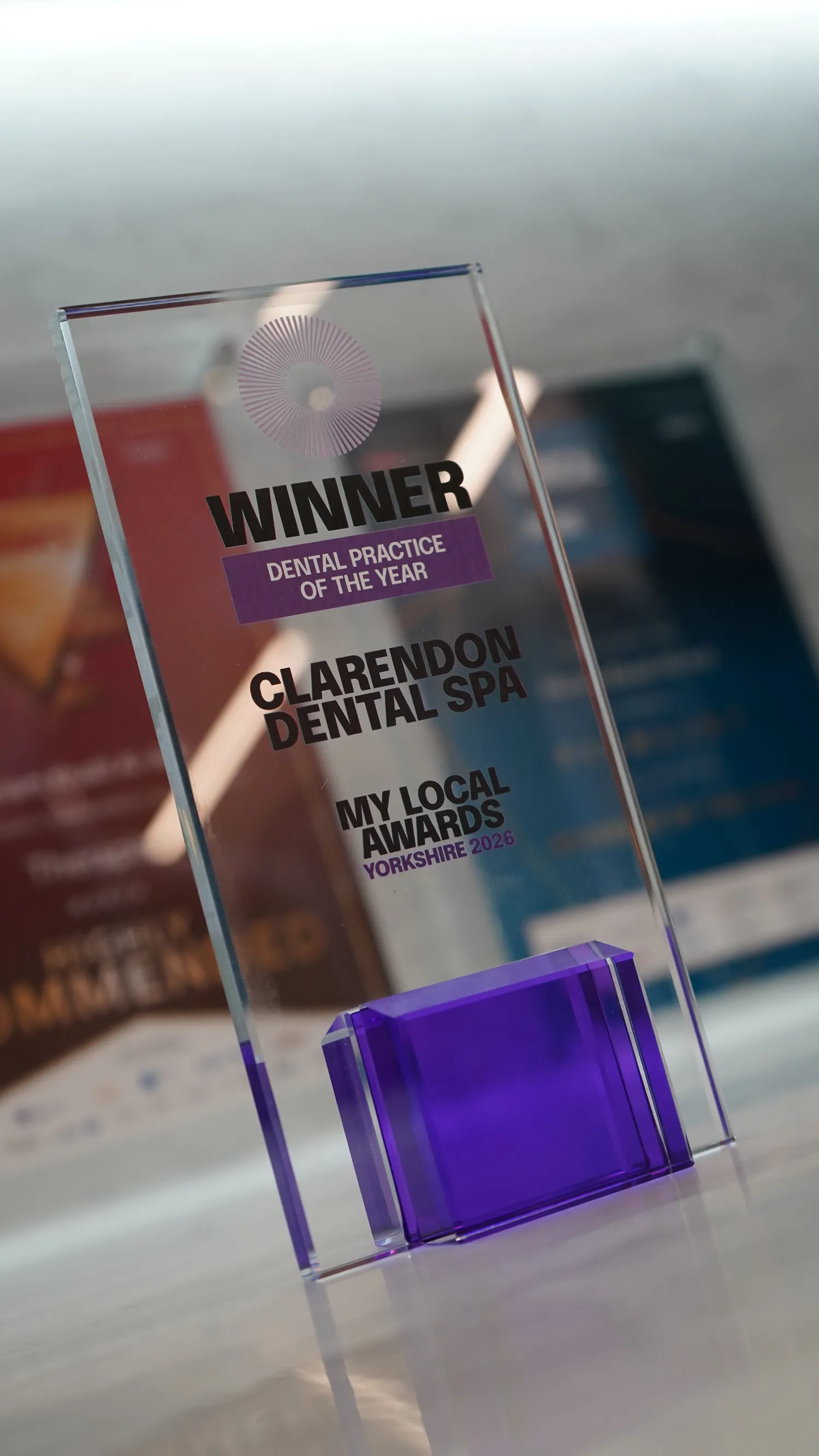
Whatever brings you in, you are in genuinely experienced hands. No practice in West Yorkshire has removed more teeth than Clarendon over the last decade, and that shows in a gentle, precise, minimal-trauma approach that means less swelling and faster healing. Care is led by a skilled surgical team — including Consultant Oral & Maxillofacial Surgeon Mr Lachlan Carter (FRCS, RCS Edinburgh), Dr Sherif Abbas-Ali (MSc Oral Surgery) and Dr Anoop Kizaekka (Oral Surgeon since 2016) — with IV sedation available for anxious patients and clear aftercare throughout. Clarendon was voted Dental Practice of the Year 2026 by real patients.
Impacted or painful wisdom teeth can be assessed and removed privately at our Leeds clinic, often far sooner than NHS waiting lists allow. If a wisdom tooth is causing pain, repeated infections, or crowding, prompt private assessment means you don't have to wait months in discomfort.
Not every wisdom tooth needs to come out — if yours are healthy, well-positioned and easy to keep clean, we'll tell you so. But when removal is the right call, our experienced team carries it out safely and comfortably, with sedation available for anxious patients or more complex cases. We'll plan your treatment carefully, explain exactly what's involved, and give you clear aftercare so recovery is as smooth as possible.
Show more
Show less
From £395
Private assessment and treatment means no long NHS wait — important when a wisdom tooth is painful or repeatedly infected.
Healthy, well-positioned wisdom teeth that are easy to clean often don't need removing — we'll give you honest advice either way.
For anxious patients or more complex extractions, sedation options help you stay calm and comfortable throughout.
For broken-down, buried or difficult teeth, surgical extraction by an experienced dentist is the safest route — and for anxious patients, IV sedation makes the whole experience far easier. You'll be looked after by our experienced oral surgery team in a calm, reassuring environment.
IV sedation is a safe and effective way to help patients who feel very anxious about treatment. It uses medication delivered into a vein to bring on deep relaxation — you stay conscious and able to respond, but feel calm, detached and much less aware of the procedure, and most people remember very little afterwards. That makes it ideal for difficult or multiple extractions, allowing the dentist to work smoothly while you stay relaxed throughout.
Show more
Show less
IV sedation is £200 per session. You’ll need someone to escort you home afterwards, as you won’t be able to drive.
A short health questionnaire at your consultation confirms suitability, so we can plan the safest, most comfortable approach for you.
Most people feel back to normal within a few hours, though we advise a quiet day at home — see our full aftercare guidance.
From straightforward removals to broken-down teeth, retained or fractured roots and impacted wisdom teeth, our team handles tooth extractions gently and safely in Leeds. We always aim to save a tooth where we can — but when removal is the right choice, we make it as comfortable and stress-free as possible.
Every extraction starts with a careful assessment, including X-rays where needed, so we can plan the safest approach and explain exactly what to expect. Simple extractions are quick and done under local anaesthetic; more difficult teeth or broken roots may need a surgical approach, with sedation available for anxious patients. Afterwards we give you clear aftercare guidance to support smooth, comfortable healing.
Show more
Show less
Straightforward, visible teeth are removed quickly under local anaesthetic; impacted teeth or broken roots may need a gentle surgical approach.
Proper anaesthesia means you should feel pressure but not pain, and sedation is available for anxious patients or complex cases.
We give you simple, clear aftercare guidance — protecting the blood clot, managing any discomfort, and knowing when to contact us — to support smooth healing.
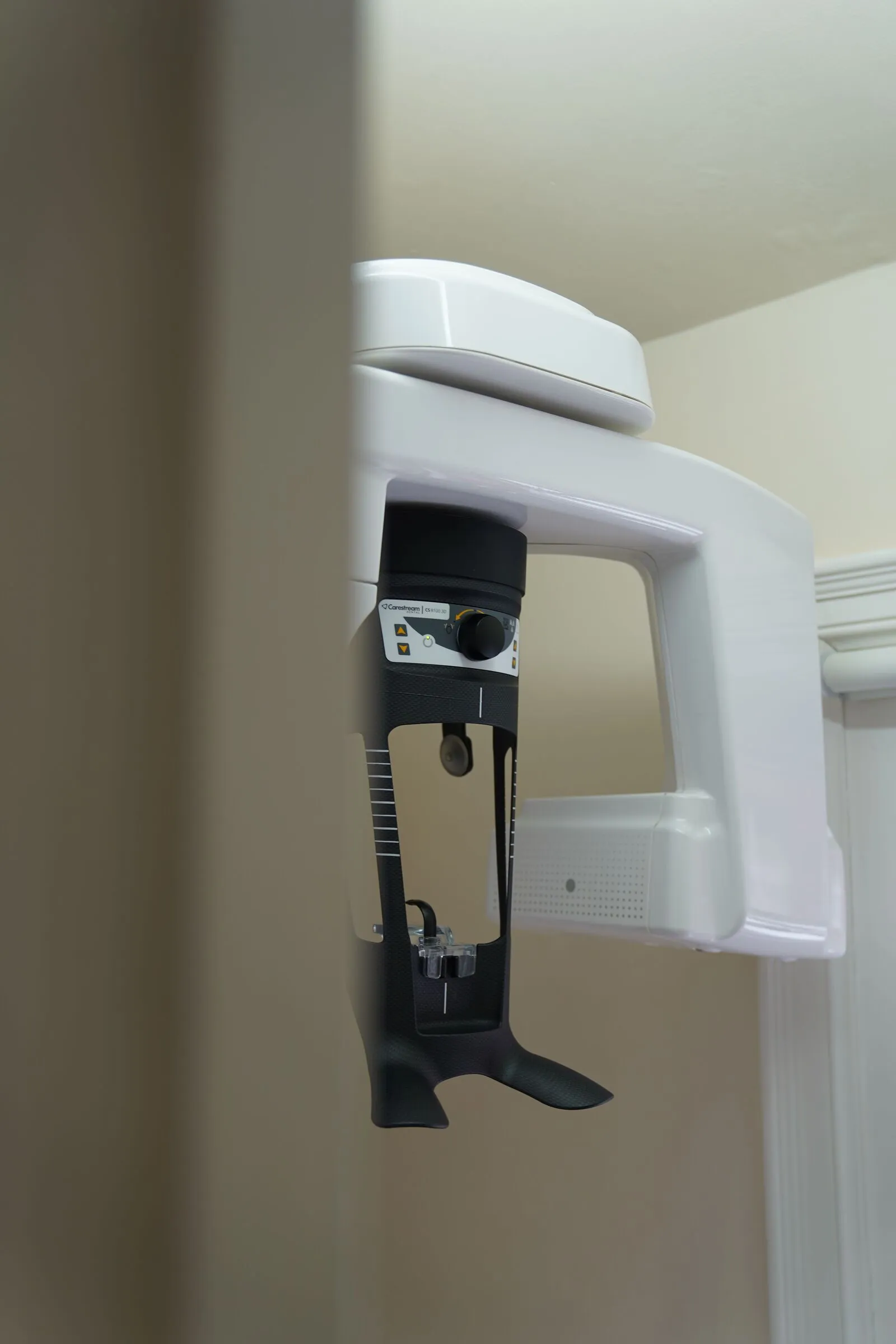
Safe, predictable oral surgery starts with accurate imaging. A small digital intraoral X-ray shows individual teeth and roots in detail, an OPG (panoramic) X-ray captures the whole jaw in one image, and a CBCT 3D scan gives a complete three-dimensional view for the most complex cases.
The right image at the right time is what makes surgery safe and predictable — letting us see bone volume, nerve positions, infections and impactions before we begin. We also welcome referrals from your own dentist for CBCT or OPG imaging if these are needed as part of your treatment elsewhere. Modern digital imaging uses low radiation doses, and we only take the images that genuinely add diagnostic value.
Show more
Show less
We review the images with you before treatment so you know what to expect — including nerve position and bone volume where relevant.
Yes — we can carry out scans immediately on site as part of your assessment.
CBCT imaging is also central to implant planning — see our dental implants service.
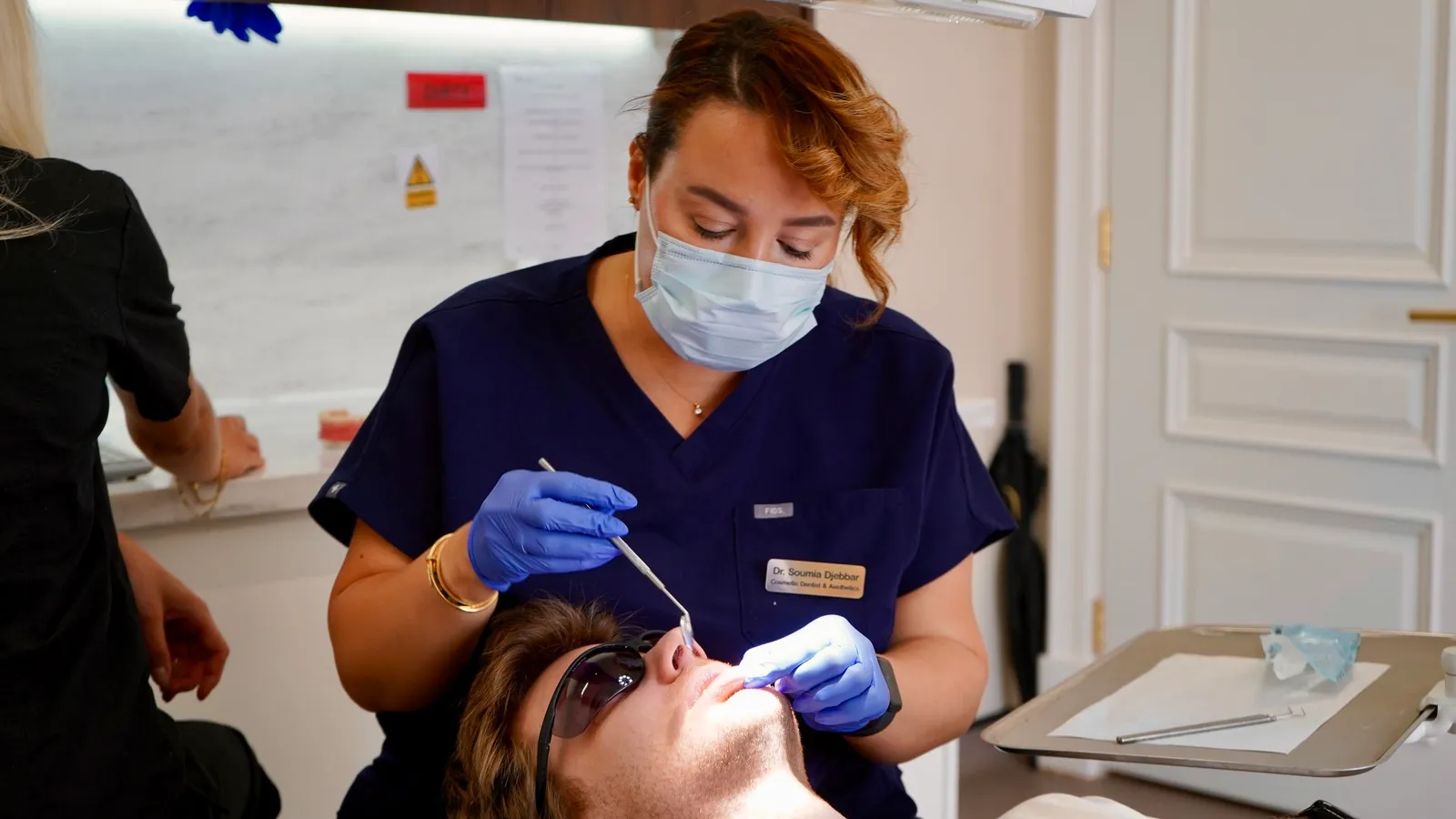
Some orthodontic cases need surgical support, and we provide it in-house. Surgical exposure of an impacted canine uncovers a tooth that's failed to come through so the orthodontist can guide it into place; a frenectomy releases a tight lip or tongue tie; and TADs (temporary anchorage devices) give braces a fixed point to move teeth more precisely.
These are minor, carefully planned procedures that work hand in hand with your orthodontic treatment. We coordinate closely with your orthodontist so the timing and approach fit your overall plan, and we carry everything out gently, with clear explanations and sedation available where it helps. The goal is always to support a smooth, successful orthodontic result.
Show more
Show less
Uncovers an impacted tooth (often a canine) that hasn't come through, so your orthodontist can attach a bracket and guide it into position.
A quick procedure to release a tight lip or tongue tie that may be affecting tooth position, spacing or function.
Small temporary anchor points that give braces a fixed reference, allowing more precise and predictable tooth movement.
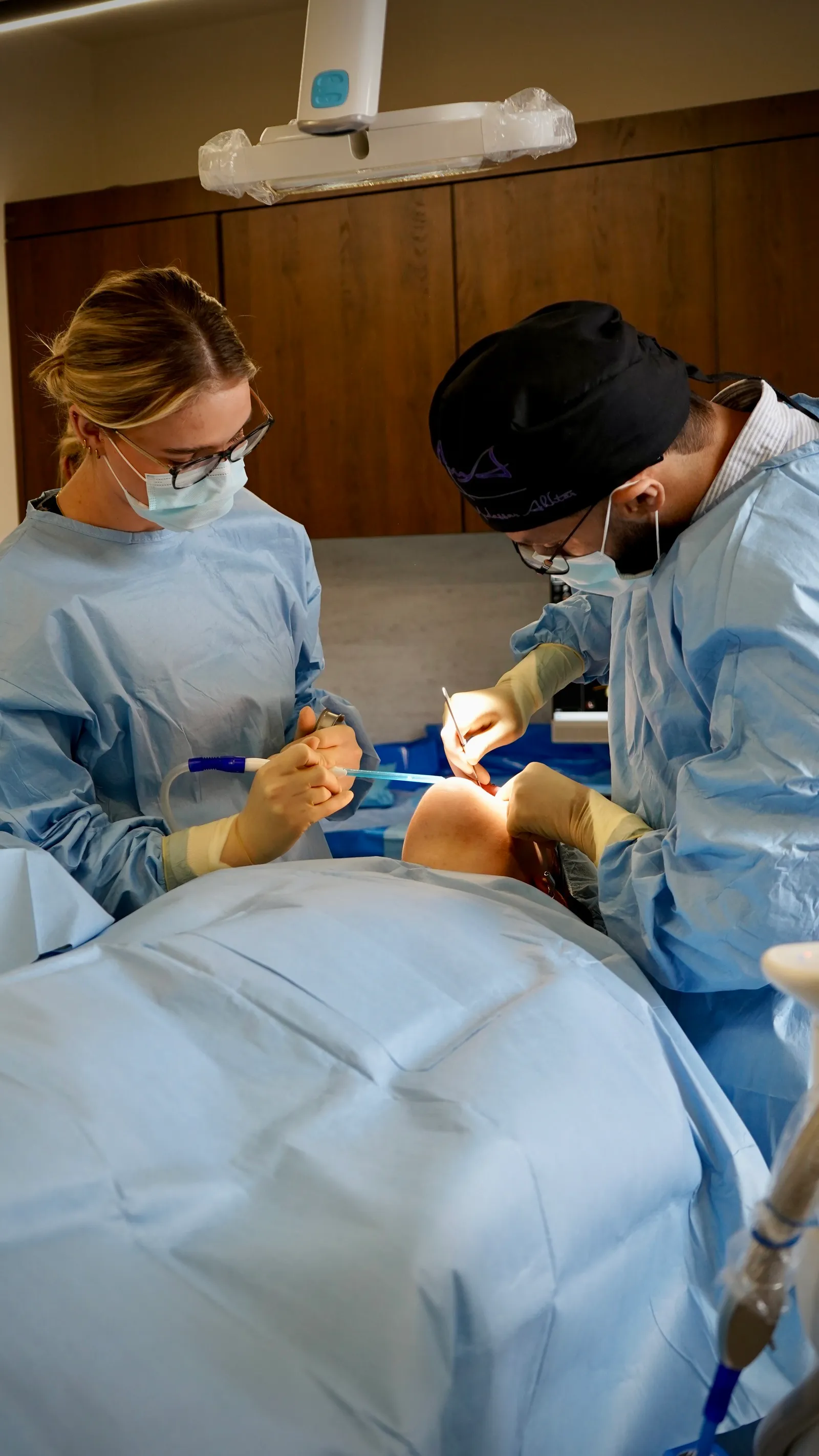
At Clarendon Dental Spa, our advanced oral surgery and oral pathology service is delivered by an experienced surgical team — including Consultant Oral & Maxillofacial Surgeon Mr Lachlan Carter (FRCS, RCS Edinburgh), Dr Sherif Abbas-Ali (MSc Oral Surgery, MFDS RCPS Glasgow), Dr Anoop Kizaekka (MSc Implant & Sedation Dentistry) and Dr Mohammed M Akhtar (FGDP Diploma in Implant Dentistry, RCS England) — for cases that need advanced expertise, from persistent root-tip infections to impacted teeth and the assessment of unusual lumps or lesions.
Advanced cases benefit from careful planning, often using CBCT 3D imaging, and a gentle surgical approach with sedation available. Whether it's a coronectomy to protect a nerve, an apicectomy to resolve a stubborn infection where root canal treatment hasn't worked, or preparing the site for dental implants, we explain everything clearly and look after you throughout.
Show more
Show less
A specialised procedure that removes only the crown of a lower wisdom tooth, leaving the roots in place to protect the nearby nerve — used in selected cases to reduce the risk of nerve damage.
A minor surgical procedure to treat infection at the tip of a tooth root when conventional root canal treatment hasn't resolved it — often saving a tooth that would otherwise be lost.
A minor procedure to help bring an impacted canine tooth into its correct position, carried out as part of orthodontic treatment.
Good aftercare is what makes recovery from an extraction or oral surgery smooth and comfortable. The first 24 hours matter most — protecting the blood clot that forms in the socket is the single most important thing you can do to avoid problems like dry socket.
For the first day, avoid rinsing vigorously, hot drinks, smoking and using a straw, all of which can dislodge the clot. Take any pain relief as advised, and a cold compress against the cheek helps with swelling. From the day after, gently rinse with warm salt water several times a day, especially after meals, and keep brushing your other teeth while avoiding the surgical site for a few days. Stick to soft, nutritious foods and chew on the other side until you're comfortable. Most sockets heal over 1–2 weeks. If you have severe pain, heavy bleeding, increasing swelling or a fever, contact us — we're here to help.
Show more
Show less
Most people return to a normal diet within a week, often sooner for a simple extraction, once the area feels comfortable.
Usually not — we use dissolvable sutures, so there’s no need to return just to have them taken out.
Many patients return the next day after a simple extraction; allow a couple of days after more involved surgery, or a little longer for physically demanding jobs.
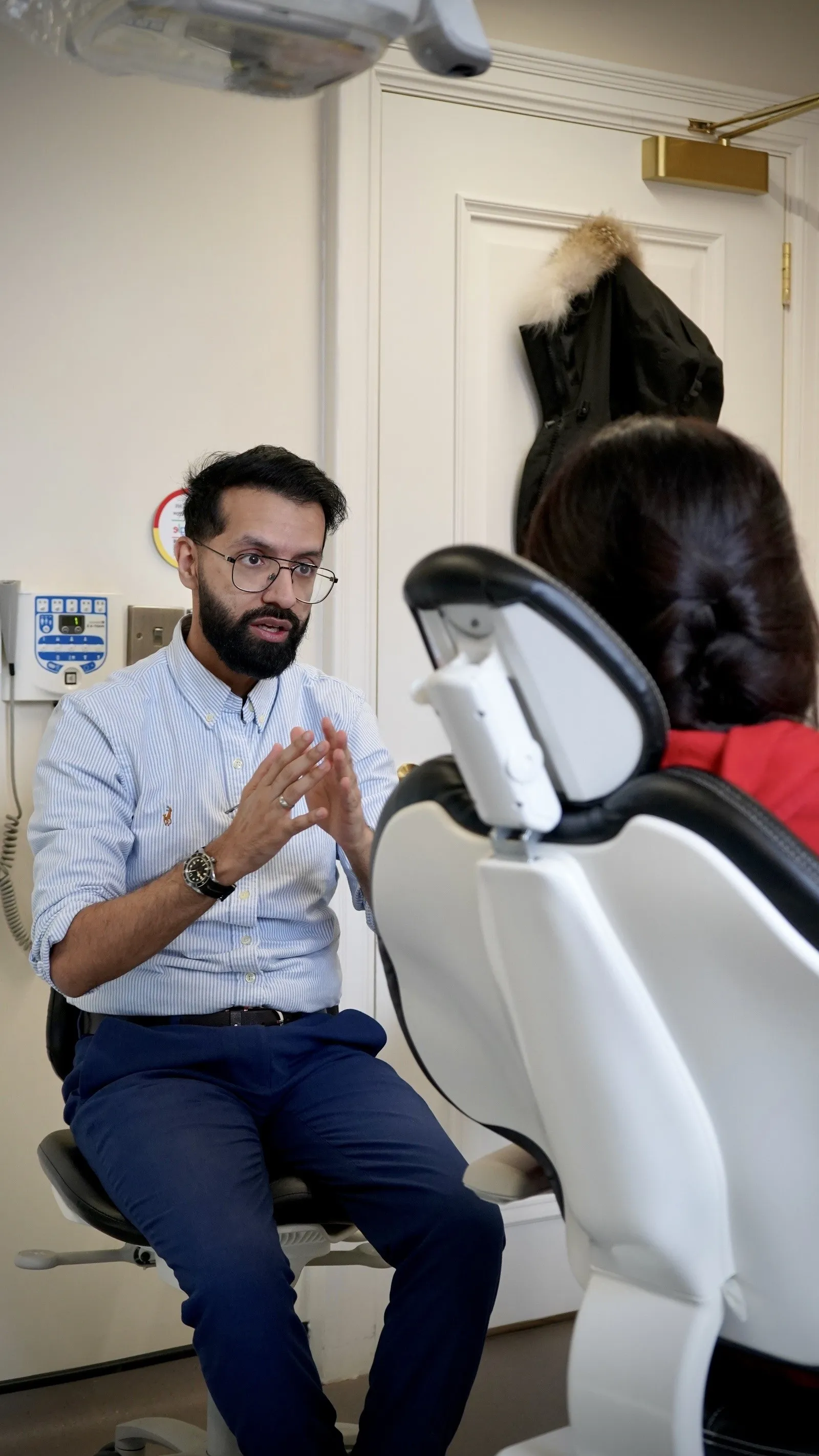
Cyst removal and soft-tissue biopsies are diagnostic and surgical procedures used to assess and manage abnormalities in the mouth — such as a cyst, lump, ulcer or patch that needs investigating. Getting these checked promptly is important, and we carry out assessment and treatment gently, with clear explanations at every step.
A cyst is a fluid-filled sac that may need removing if it's growing, causing symptoms or affecting nearby teeth or bone. A biopsy takes a small tissue sample so it can be examined and an accurate diagnosis reached. Both are minor procedures, usually done under local anaesthetic with sedation available if you're anxious. We'll explain what we've found, what it means and what happens next — because being kept informed is reassuring when something needs looking into.
Show more
Show less
Results usually come back within two weeks, and often sooner.
Most soft-tissue procedures heal with minimal visible marking; we’ll talk through what to expect for your case at consultation.
If a result needs further follow-up, we’ll arrange it promptly and explain the next steps clearly.
Facial and neck skin tag removal is a minor procedure to safely and gently remove small, benign skin growths — carried out in the calm, clinical setting of our Leeds practice. Skin tags are harmless but can catch on clothing or jewellery or simply be unwanted, and removal is quick and straightforward.
After assessing the skin tag, removal is carried out under local anaesthetic using a minimally invasive technique, so it's comfortable and leaves minimal mark. The procedure usually takes only a few minutes, and we'll give you simple aftercare guidance to support clean, smooth healing. If anything about a skin lesion looks unusual, we'll advise the appropriate next step rather than simply removing it.
Show more
Show less
Because skin tags vary in size, number and location, we give you an exact price rather than a rough guess. Send us a photo or call the practice for a quick quote, or book a short assessment — whichever is easiest for you.
This depends on number, size and location — we’ll advise what’s comfortable to do in a single appointment at your assessment.
As a cosmetic/elective procedure this typically isn’t covered by dental insurance — we’ll always be clear on costs up front.
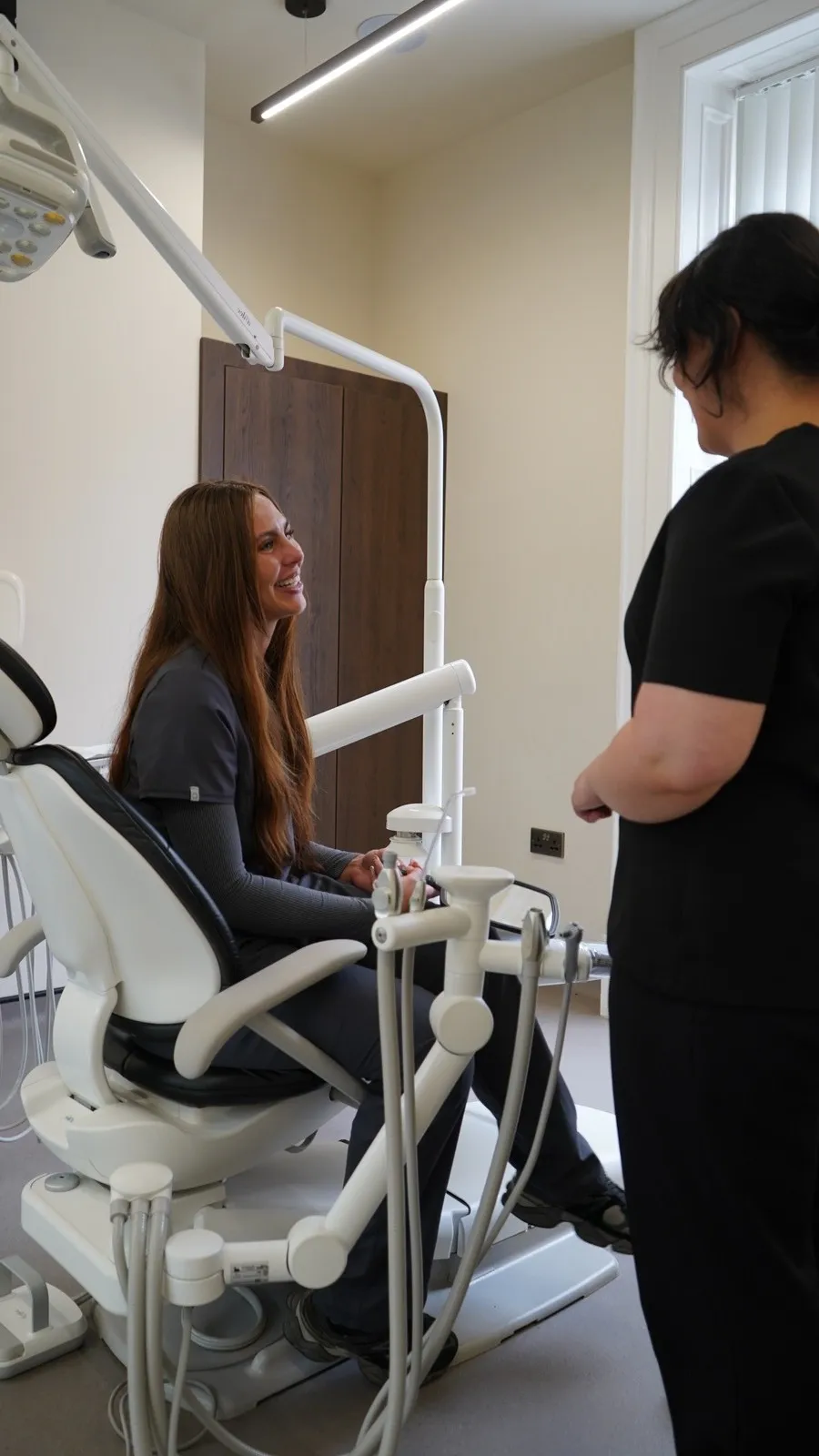
Beyond routine extractions, our Leeds team treats a range of less common oral surgery needs — including salivary gland stone removal, mucocele removal and adult tongue-tie release. These are carried out gently under local anaesthetic, with sedation available, by experienced oral surgery clinicians such as Dr Anoop Kizaekka, whose scope includes salivary stone removal and soft-tissue surgery.
Every case starts with a careful assessment so we can explain what's involved, what to expect and how recovery will feel. Because these procedures are less routine, planning and gentle technique matter — and we keep you fully informed at each step. Where a tissue sample is needed, we can arrange a biopsy at the same time so you get clear answers as quickly as possible.
Show more
Show less
Small stones can form in a salivary gland duct and cause pain or swelling, especially at mealtimes. We can locate and remove a stone under local anaesthetic to relieve the blockage and restore normal flow.
A mucocele is a harmless fluid-filled swelling, often on the inner lip, caused by a blocked or damaged minor salivary gland. If it keeps recurring or is bothersome, we can remove it in a short, gentle procedure.
A restrictive tongue-tie (lingual frenum) can affect speech, eating or comfort in adults. A lingual frenectomy releases the tight band of tissue in a quick procedure under local anaesthetic, with simple aftercare.
Oral cancer screening is a careful check of the soft tissues of your mouth, tongue, gums and throat for any changes — such as a white or red patch, a lump, or an ulcer that hasn't healed. Most changes turn out to be harmless, but checking early gives real peace of mind, and where anything needs a closer look we can arrange a biopsy promptly.
A screening is quick, painless and non-invasive: we visually examine and gently feel the tissues of the mouth and neck, and ask about anything you've noticed yourself. If we find an area that needs investigating, we'll explain clearly what we've seen and arrange the appropriate next step — often a soft-tissue biopsy so an accurate diagnosis can be reached. Being kept informed is reassuring, and acting early is always the safest approach.
Show more
Show less
We examine the lips, tongue, cheeks, floor and roof of the mouth, gums and throat, and gently feel the tissues of the mouth and neck for any lumps or changes.
Tell us about a white or red patch, a lump or thickening, or a mouth ulcer or sore that hasn't healed within about three weeks — these are worth getting checked, even though most turn out to be harmless.
If we find an area that needs a closer look, we can arrange a soft-tissue biopsy so it can be examined and an accurate diagnosis reached — see our Cyst Removal & Soft-Tissue Biopsies service on this page.
THE BRAND PATIENTS TRUST
Wish I could give it more than 5 stars! Been for a wisdom tooth extraction with Dr Sherif Abbas-Ali, very nice, clean, modern place with amazing staff!
Gabriela I
I was extremely nervous but Dr sheriff made me feel very comfortable and relaxed for my wisdom tooth out within seconds!
Laura Smith
Had a wisdom tooth removal under sedation with dentist Sherif, he was really lovely and made me feel super calm (i hate needles!). Amazing experience.
Holly Warwood
I have been for a wisdom tooth extraction today and all I can say is wow. Dr Sherif and the nurse Kes were absolutely fabulous. So quick and painless.
Lucy Hegan
I've had to have 3 separate removals from Clarendons... First time with Lachlan who took wonderful care of me. Can't recommend them enough for nervous patients.
Lukus Woodhouse
Great experience from start to finish, explained what he was going to do or have to do to remove a broken tooth. Professional and quick. Highly recommend.
Neil Wellman
Excellent communication and very friendly, the dentist mustafa made me feel at ease I couldn't even tell the tooth was out thankyou very much.
Nadia Akhtar
Just had a tooth removed (emergency appointment) however due to the amazing and non painful removal by the lovely doctor Mustafa I will definitely become a regular.
Edward Henderson
Amazing place with an amazing dentists (especially Mustafa Shihab). I had wisdom tooth extraction and he was so gentle that I didn't feel uncomfortable at all.
Agnieszka Król
Dr Elnaz was brilliant during my son's extraction. Very reassuring.
Robert K.
Dr David was wonderful during a difficult extraction for my daughter.
James R.
I dealt with Dr. Fadi (endosurgery) and Dr. Jaffar Ali (Oral Surgery). Both are so professional and described my situation in details.
Norma Kashouh
Dr Akhtar and the team were wonderful. Highly professional.
Karen L.
Dr Mohammed Akhtar is a fantastic surgeon. Very gentle.
Sophie T.
Excellent care from Dr Akhtar. Very reassuring and professional.
Lisa M.
Dr Mohammed Akhtar made a difficult procedure very easy. Thank you.
Emma G.
Dr Akhtar (Mudassir) was brilliant with my surgery. Very skilled.
Sarah V.
Today I went to the dental spa to have a tooth removed that my own dentist couldn't remove, I wasn't looking forward to it. However I shouldn't have worried as Sherif was incredible.
Glen Segal
I had to go to the Clarendon Dental spa for my wisdom tooth taken out I was absolutely terrified but my dentist Sherif Abbas-Ali was amazing.
Emma Higgins
I recently had cause to have a lower wisdom tooth extracted, my own dentist advised me to be referred to Clarendon Dental Spa. Sherif was absolutely superb.
Clive Thompson
I've had the procedure of tooth extraction under IV sedation with Dr Sherif Abbas-Ali and even I was terrified and almost paralysed by anxiety, he did amazing.
Zuza Wovska
I had a tooth extraction by sedation. Sherif Abbas Ali and his nurse were very professional, calm, kind and caring. I barely remember the procedure.
Alison Ward
After enduring a previous traumatic extraction, Dr Sherif Abbas-Ali was fantastic. He put me at ease immediately and the extraction was completely painless.
Debbie Taylor
If there were 10 stars I would award them. I was greeted by Dr Sherif Abbas Ali who, from start to finish treated me with courtesy, kindness and gentleness.
Sheila Turton
Absolutely amazing treatment from the second I entered the building until the moment I left. Highly professional, inspired my utmost confidence. Dr Sherif was brilliant.
Jane Cooper
The dentist Sherif Abbas-Ali explained everything before starting. He then numbed my gums and within 10 minutes my tooth was out. Excellent!
Diane Wilks
I went in for two extractions - lower molar and upper wisdom, both broken and on the same side. Needless to say I was very anxious... Sherif was fantastic. Both teeth were out within 15 minutes.
Sarah Austin
I got referred for a wisdom tooth extraction by my dentist in Halifax. Dr Anoop and all the staff at the Dewsbury clinic were very very friendly and professional.
Iram Tariq
Anoop and his team were excellent. I went for a wisdom tooth extraction and was very nervous but Anoop and his team were lovely and reassuring.
Hannah
Quick and easy upper wisdom tooth removal by Anoop Kizaekka, not painful at all, recovery after was great.
Naheed Shah
I was referred to the Clarendon Detail Spa by my regular dentist for a wisdom tooth extraction, I was very nervous but Anoop & Autumn were very understanding.
Cheryl Conner
Have a phobia about dentist but what a Lovely dentist Anoop Kizaekka is, had two teeth extracted, no pain explained everything.
Linda Milner
I was booked in for an extraction - 50 years since my last one - and was feeling quite anxious but the dentist Anoop and the nurse put me at ease.
Brendan McDaid
Absolutely was dreading this as I just don't like dentist, it's one of my major fears, but wow. Dentist Anoop was absolutely lovely and straight forward.
Sophie Fanthorpe
Today I had a tooth out, I was so nervous and anxious but Anoop was absolutely amazing he talked me through everything step by step.
Fiona Audsley
Quick and easy extraction done by Anoop & Iqria. Thank you both for making me feel calm whilst carrying out a super efficient wisdom tooth removal. 5*
Libby Kendall
Would definitely recommend Dr Anoop. Fantastic pain free extraction of tooth completed in minutes, I didn't feel the numbing injection or any discomfort.
Anne Kowalczyk
I recently had my wisdom tooth removed at Thornhill Dental, and I couldn't be happier with the experience! Dr. Anoop and his assistant were incredibly professional and caring.
Fatima Mota
Anoop was the best dentist I have ever met, I was so nervous and he put me at complete ease when removing my wisdom tooth. I was so shocked how quick and painless it was.
Jessica Parlour
I was feeling anxious about having a large back tooth out. Anoop was so kind and reassuring in his manner. The injection was administered without issue and the tooth was out before I knew it.
Ruth Crossley
Was very nervous as hadn't had a tooth extraction for 50 years. My dentist referred me as the tooth had cracked... Anoop was brilliant. Explained everything, quick and completely painless.
Wendy Swailes
Absolutely excellent service from Anoop Kizaekka. I was referred to him for an extremely tricky extraction. With his skill and knowledge he performed the extraction perfectly.
Clare Jeffree
Saw Lachlan for an extraction, both dentist and dental nurse made me feel as comfortable as possible, only issue was they ran half an hour late, but the actual care and treatment was excellent.
Kat Hopwood-Lewis
Visited for tooth extraction by Lachlan carter must say he is one off the best dentist I've seen seemed very experienced and didn't hurt at all. Very professional.
M M
I had an appointment for a molar to be removed due to a vertical root fracture and Lachlan was amazing, he explained everything thoroughly and the extraction was so smooth and pain free.
Jessica Vallance
I can't recommend Soumia enough I've been seeing her for well over 10yrs now. Today I had to have an extraction and being a really nervous patient she made me feel completely at ease.
Jules Clappers
Excellent. Dr Aisha was so reassuring. She explained everything step-by-step. I was a nervous wreck about my tooth extraction but Dr Aisha completely put me at ease and looked after me so well.
Queen Vic
Excellent. Dr Aisha was so reassuring. She explained everything step-by-step. I was a nervous wreck about my tooth extraction but Dr Aisha completely put me at ease and looked after me so well. I can't thank her and her colleagues enough. Highly recommend ⭐⭐⭐⭐⭐
Sam Carter
Wow! I was so nervous when going for my first ever molar extraction (at 40+ yrs old)... But the daft thing was I needn't have been at all. Dr Ahmed Al-Ani, and Jeni put me at ease completely. They explained clearly what the procedure involved, and before I knew it the tooth was out. No pain!!! :-). My thanks to all at this excellent practice, heartily recommended.
Paul Denman
“Recently had emergency assessment and treatment done by Dr Soumia Djebbar … she was extremely gentle and efficient. My treatment was pain-free”
Jody Sheppard
“Root Canal, two words to strike fear into the bravest people … but Dr Peter Nixon is the most calm, methodical and gentle dentist I could hope to meet. I am overjoyed with my new tooth”
Lee Bryan
“Dr Ghafraan Hussain did a tooth extraction due to a collapsed root canal. I was more than happy with the treatment and the first class setup from arrival to departure”
Gerald Armstrong
“Received treatment on a broken molar that required extraction…Ghafraan Hussain was a brilliant surgeon … the treatment here was absolutely fantastic”
Mr Champken
I was terrified before having my tooth extracted … but what professional, compassionate and friendly people. I cannot give enough praise to Dr Anoop Kizaekka and all the lovely staff at Clarendons”
Pamela France
“Was a bit nervous to have my wisdom tooth out … but Anoop and Abbie put me completely at ease … they were both so professional, calm and reassuring”
Jennifer Macleod

Dr Mohammed M Akhtar
July 3, 2026