
Next
Next
Positive first visits, healthy habits for life
A calm first dental experience can shape how a child feels about oral health for years. Here is how parents can prepare and what to expect.
By Dr David Auld, GDC-registered Specialist in Paediatric Dentistry (GDC 85405).
A child’s early experiences at the dentist can shape how they feel about dental care for years. A calm introduction, clear explanations and regular preventive care can help children build confidence while giving parents practical support.
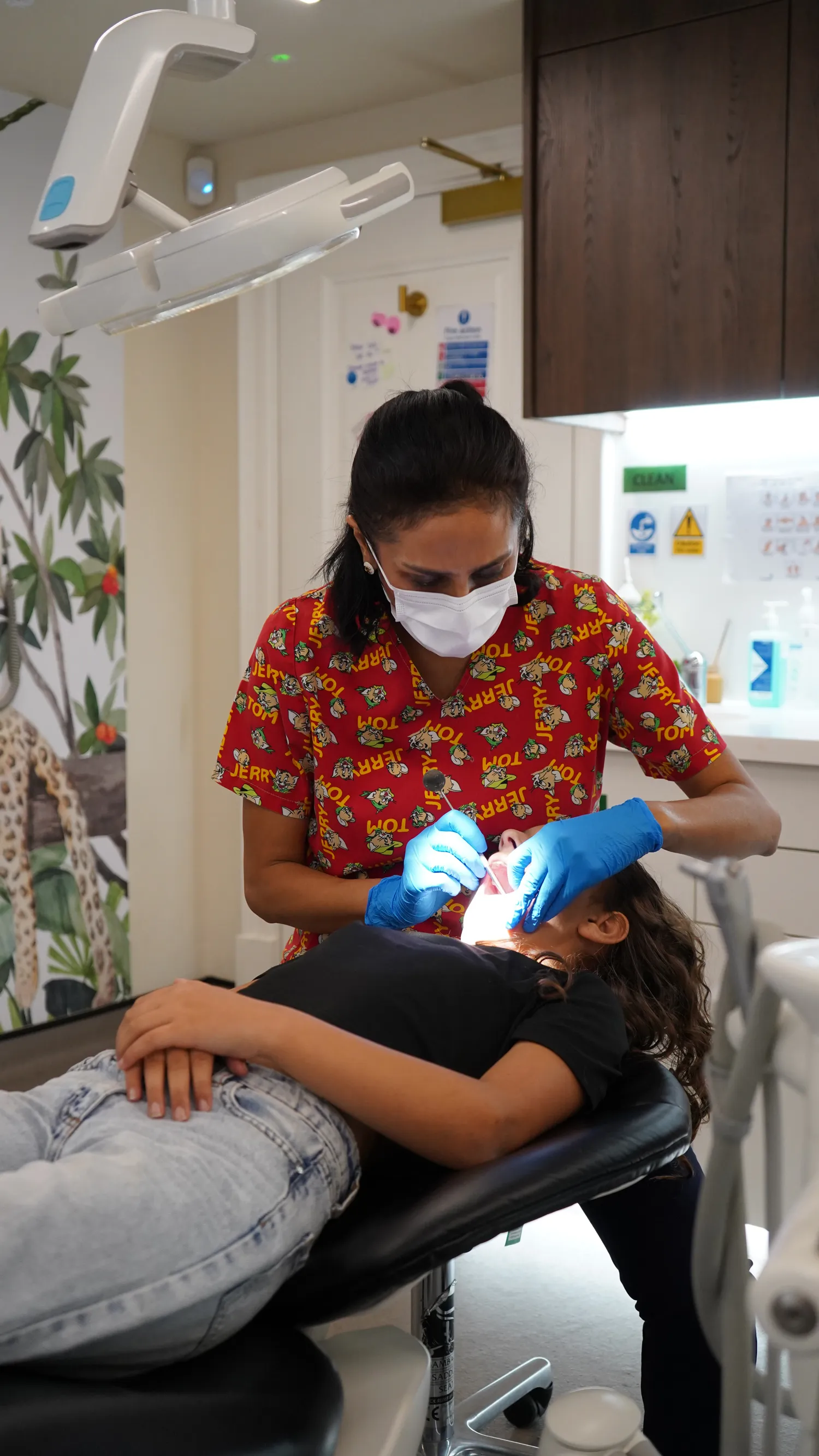
Dental visits are not only for treating problems. Early appointments allow a child to become familiar with the environment, meet the team and practise simple steps such as sitting in the chair and opening their mouth.
The NHS recommends taking a child to the dentist when their first milk teeth appear, or before their first birthday. These early visits give parents an opportunity to ask about brushing, fluoride, diet and teething while allowing the dentist to identify concerns promptly.
Keep the explanation simple and positive. Tell your child that the dentist will count and look after their teeth, rather than promising that “nothing will hurt” or introducing worries they may not have considered.
For some children, a familiarisation visit is the best starting point. Nothing clinical needs to happen; simply seeing the room, meeting the team and becoming comfortable in the chair can be valuable progress.
Every appointment should be adapted to the child’s age, confidence and needs. A check-up may include examining the baby and adult teeth, checking the gums, monitoring how the permanent teeth and bite are developing, and providing age-appropriate brushing and diet advice.
Digital X-rays are used only when clinically necessary. For example, bitewing X-rays can help identify decay between back teeth where it may be difficult to see directly.
Parents and carers remain involved throughout. You can hear what is being discussed, ask questions and understand how to support your child’s oral health at home.
There is no single approach that works for every child. Some children need more time, quieter appointments or clear step-by-step explanations. Others may benefit from adjustments to lighting, sound, pacing or the order in which things happen.
We can plan familiarisation visits before treatment and work with parents, carers and a child’s wider support network where helpful. The aim is to build confidence gradually, never to rush a child through an appointment.
When anxiety continues to make treatment difficult, inhalation sedation may be considered after an individual assessment. The child remains awake and able to respond while breathing a carefully controlled mixture of nitrous oxide and oxygen through a soft nose mask.
Good habits at home remain the foundation of prevention. The NHS advises brushing twice daily for about two minutes with fluoride toothpaste, including last thing at night.
At appointments, practical coaching can be tailored to the child. Disclosing tablets, demonstrations and positive feedback can make brushing easier to understand and help improvements feel achievable.
Some children need support beyond routine examinations. Specialist-led care can help with developmental enamel conditions, dental trauma, additional medical or neurodevelopmental needs, severe anxiety, complex decay and treatment recommended by an orthodontist.
Early assessment is particularly useful when teeth appear unusually white, yellow or brown, feel sensitive, or chip easily. These signs may be associated with developmental enamel defects and should be assessed rather than managed solely at home.
Dental injuries also need prompt advice. If an adult tooth is knocked out, keep it moist in milk or saliva, do not scrub it, and contact a dentist immediately. Knocked-out baby teeth should not be reimplanted, but the child should still be assessed.
Successful children’s dentistry is not measured only by completing treatment. It is also about helping a child feel listened to, understand what is happening and develop a positive relationship with dental care.
Clarendon Dental Spa provides calm, specialist-led children’s dentistry in Leeds, including preventive care, support for anxious and neurodivergent children, dental trauma management and treatment for complex needs.