Next
Next

Crowns from £795 per tooth
0% APR *finance available over 12 months as well as longer terms (*Subject to affordability, age and status. Minimum spend applies)
e.g. 2 crowns £1,590 — from £66 per month over 24 months
Dental crowns, veneers, bridges and white fillings at Clarendon Dental Spa in Leeds rebuild teeth that are broken, worn or heavily filled — precisely fitted and backed by our 12-month structural guarantee.
Every restoration is about more than fixing a tooth — it's protecting your long-term oral health and preventing further problems. At Clarendon Dental Spa we take a considered, conservative approach, always recommending the option that preserves the most natural tooth and genuinely lasts.
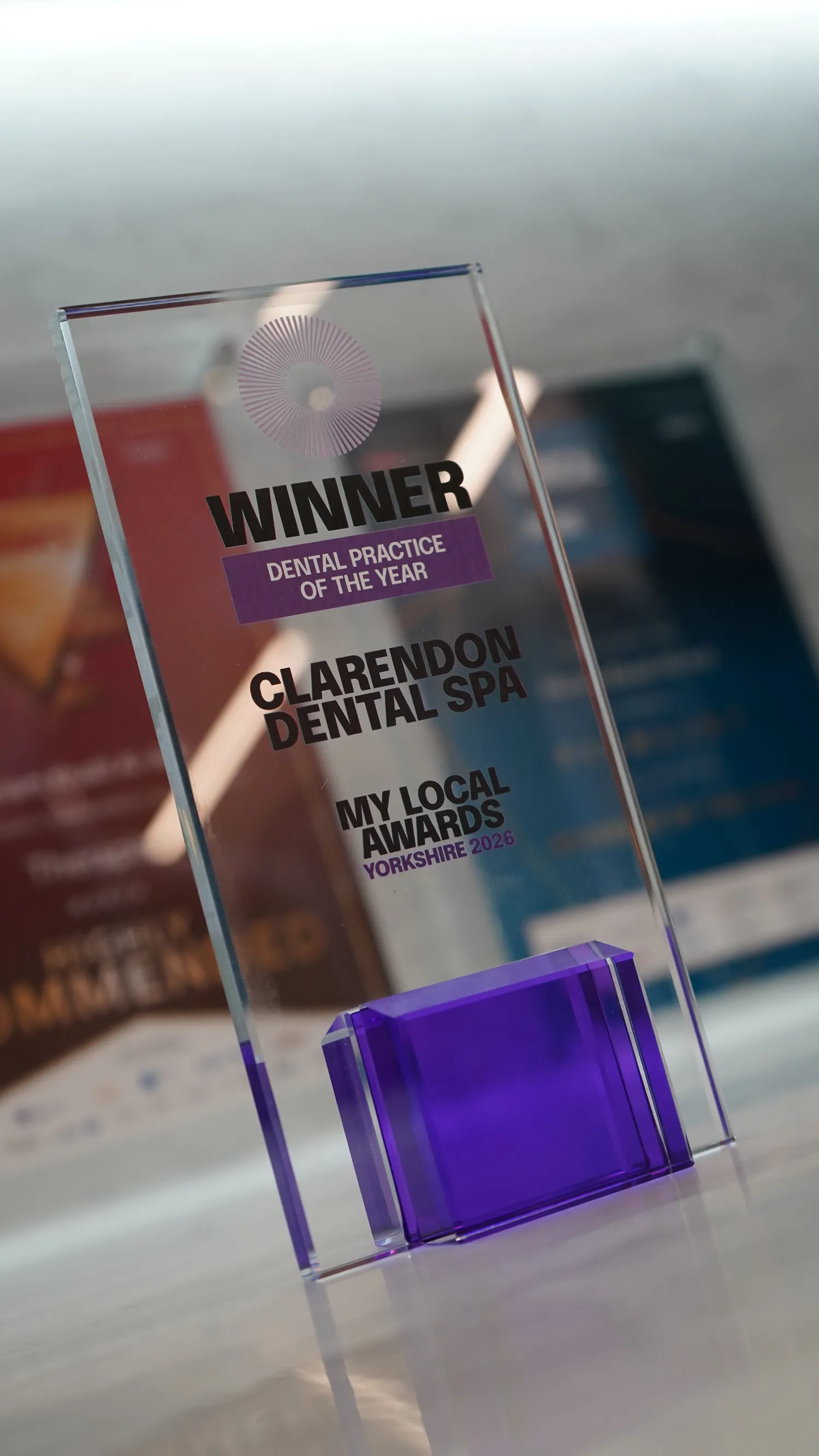
More complex restorative and cosmetic cases are reviewed by Dr Ahmed Al-Ani, who holds an MSc in Restorative & Aesthetic Dentistry (University of Manchester, Merit) and is a full member of the British Academy of Cosmetic Dentistry — so your treatment is planned with an eye for both strength and natural aesthetics. Voted Dental Practice of the Year 2026 by real patients.
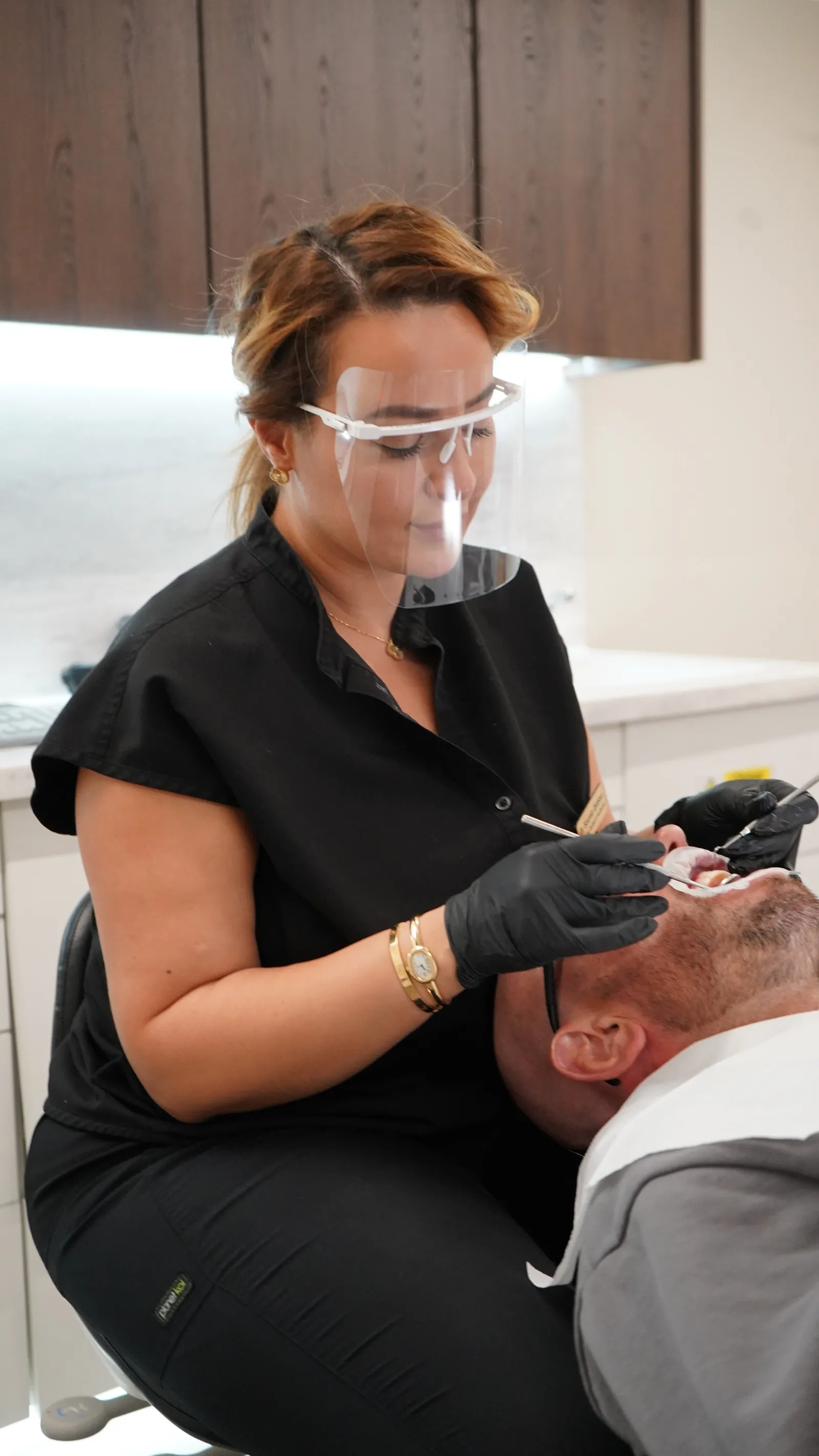
A dental crown is a custom-made cap that covers a weakened, broken or root-treated tooth to restore its strength, shape and natural appearance while protecting what remains of the natural tooth. At Clarendon Dental Spa our crowns are designed and clinically reviewed by Dr Ahmed Al-Ani, who holds an MSc in Restorative & Aesthetic Dentistry (University of Manchester, Merit). We offer the full range of crown materials — from £795 per tooth — and help you choose the one that's right for the tooth, your bite and your budget, with *0%APR finance over 12 months available (*subject to affordability, age and status. Minimum spend applies)
Crowns are recommended when a tooth is too badly decayed for a filling to safely restore, after a root canal treatment (root-treated teeth become brittle and fracture-prone), for teeth with large fractures or cracks, for severely worn or ground-down teeth, and to finish dental implants and bridges. A great crown is invisible, comfortable and lasts — and that comes down to conservative-but-adequate tooth preparation, an accurate digital scan (we don't take messy putty impressions), careful bite registration, premium lab work and meticulous fitting.
We take a 3D digital scan rather than a traditional impression — more comfortable (no gagging), a faster lab turnaround and a highly precise fit that seals the tooth and lasts. We work with one of the UK's most respected dental ceramic labs and don't cut corners. Treatment is delivered in our award-winning Leeds city-centre clinic with effective anaesthesia, sedation for nervous patients, transparent pricing and responsive aftercare. Voted Dental Practice of the Year 2026 by real patients.
Show more
Show less
From £795 per tooth
price varies by material; 0% interest-free finance available
The best crown depends on where the tooth is, how hard it works and the look you want. We offer every option.
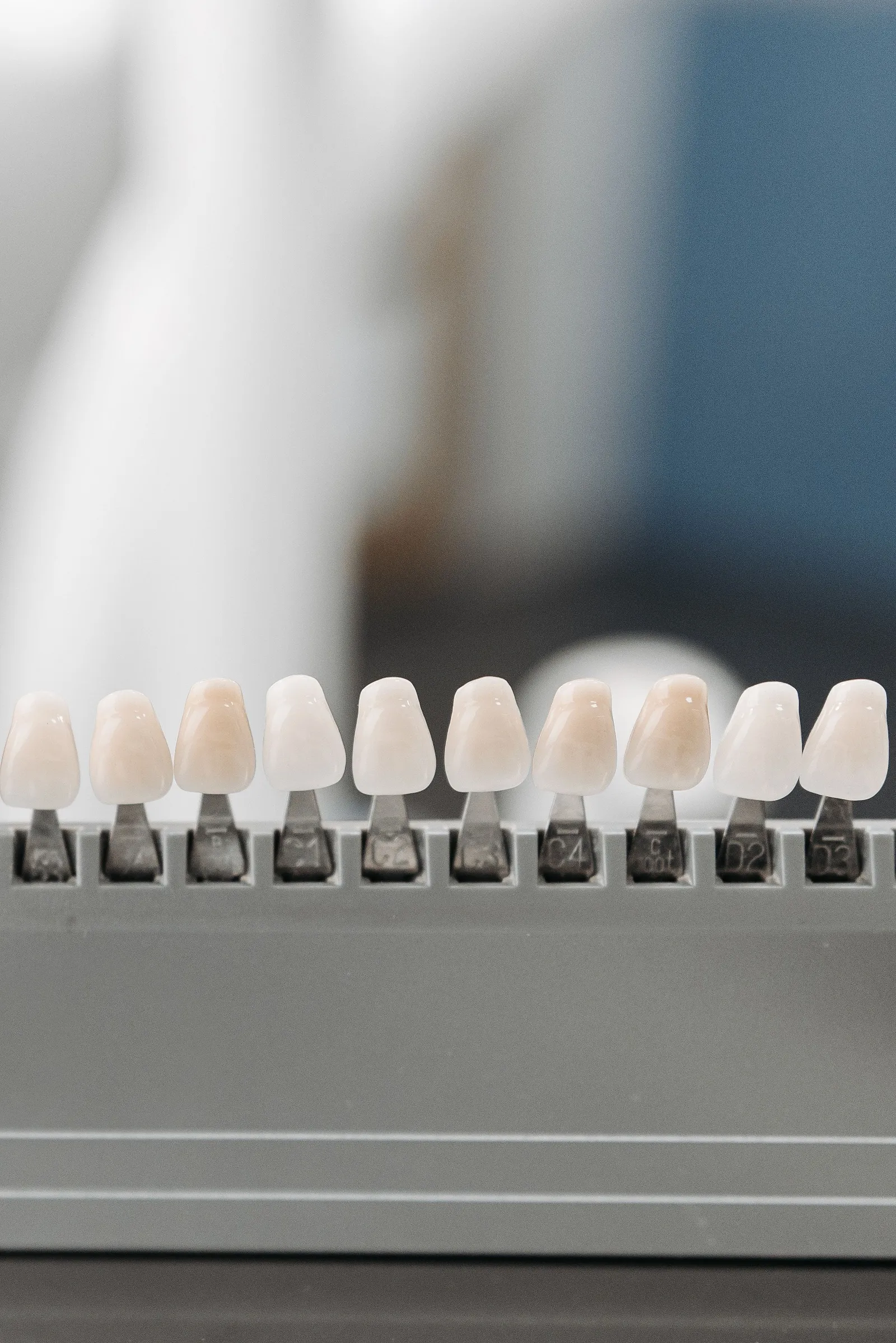
Zirconia — exceptionally strong and natural-looking; ideal for back teeth, heavy bites and grinders, and increasingly for front teeth too.
E-max (lithium disilicate) — the premium all-ceramic for front teeth; outstanding translucency and lifelike beauty with excellent strength.
All-ceramic / full porcelain — metal-free and highly aesthetic, a great natural-looking choice where appearance matters most.
Porcelain-fused-to-metal (PFM) — a tooth-coloured porcelain outer over a strong metal core; a proven, durable all-rounder.
Gold / precious alloy — extremely kind to opposing teeth and virtually unbreakable; the longest-lasting option where looks are less critical (typically back teeth).
Prices start from £795 per tooth and vary by material — we’ll quote you clearly before anything begins.
A well-made, well-fitted crown typically lasts 10–15 years and often much longer — gold can last decades. Longevity depends on the fit, the material and your care: brush and floss around the crown as normal (decay can still form at the margin), keep up regular hygiene visits, avoid biting nails, pens or ice, and wear a nightguard if you grind. Look after it and your crown protects the natural tooth underneath for the long term.
A crown covers the whole tooth and suits heavily broken-down or root-treated teeth — but it isn't always the least destructive choice. For a front tooth, a veneer can often achieve the same visual result as a crown while removing far less natural tooth. For a back tooth — especially after a root canal — an onlay can protect and rebuild the tooth while conserving more structure, and it's usually quicker and easier to prepare and more affordable than a full crown. We'll always recommend the most conservative option that genuinely lasts — never more treatment than the tooth needs.
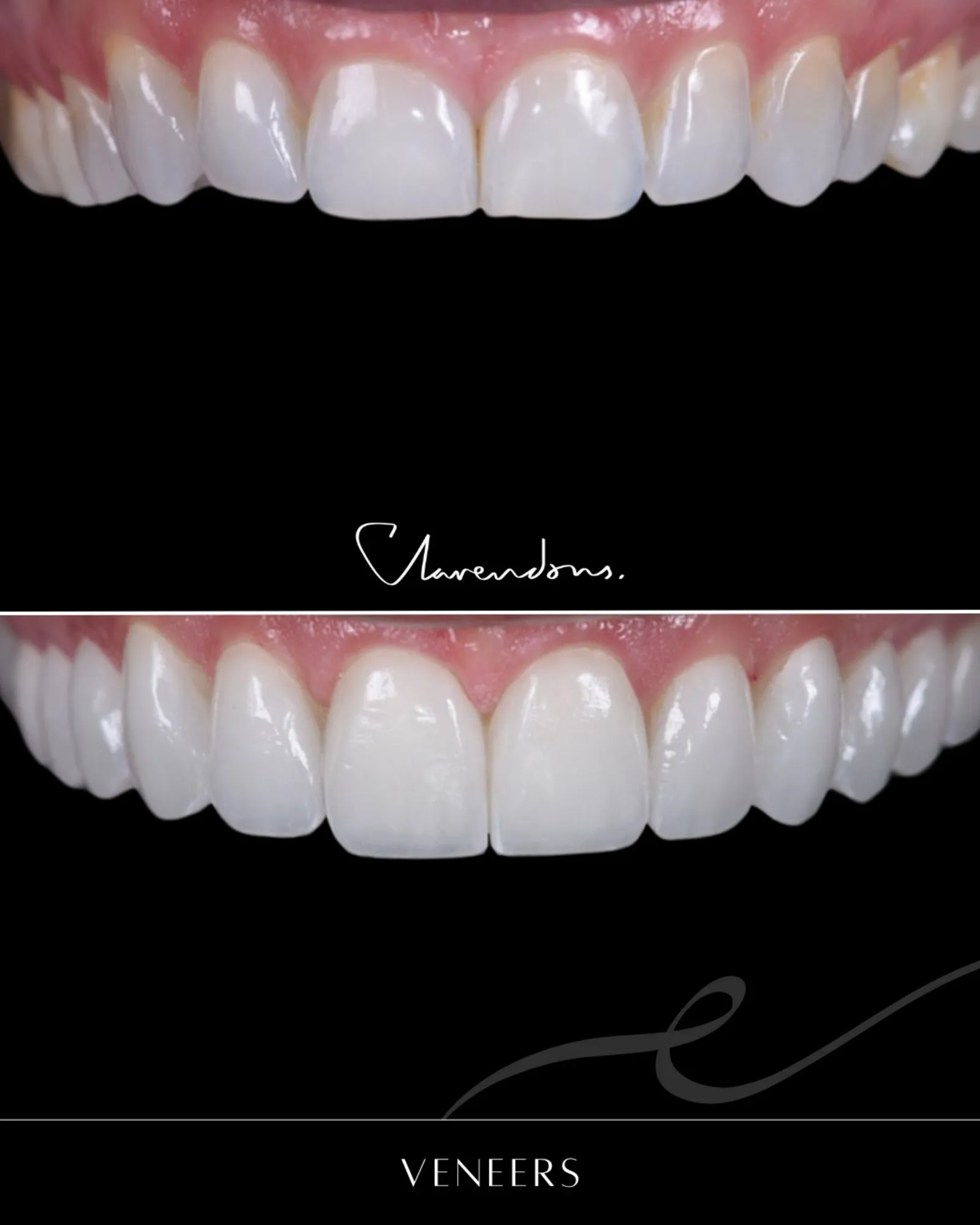
A dental veneer is a very thin, custom-made layer bonded to the front of a tooth to restore its shape, edge and appearance — an excellent, tooth-conserving way to rebuild a chipped, worn or uneven front tooth while keeping as much natural enamel as possible. Because a veneer only covers the front surface, it can often give the same visual result as a crown while preserving much more of your natural tooth.
Because veneers need only minimal preparation, they can be a more conservative alternative to a crown for a front tooth that is chipped, worn at the edge, slightly out of line or discoloured — and a longer-lasting alternative to repeated composite bonding where durability and stain resistance matter. Each veneer is designed around your own features so the result looks natural, not "done". Porcelain veneers from £795 per tooth, with 0% interest-free finance available.
Choosing between a veneer, a crown or bonding comes down to how much tooth structure is involved and the result you want — and we'll always advise the most conservative option that genuinely suits you. For full smile-makeover treatment, porcelain and composite options and the complete veneers journey, see our dedicated cosmetic dentistry and veneers in Leeds page.
Show more
Show less
From £795 per tooth
*0%APR Finance available over 12 months, longer terms also offered. (*subject to affordability, age and status. Minimum spend applies)
Veneers require only a very thin layer of preparation — far more conservative than a crown — so more of your healthy natural tooth is kept while still transforming its appearance.
Where teeth are only slightly uneven or worn, veneers can improve symmetry and shape without full orthodontic treatment. Where movement is the better answer, we'll say so and point you to our orthodontics options.
Custom-made to match your smile, porcelain veneers resist staining and, properly fitted and cared for, can last many years — a long-term investment in a confident, balanced smile.
White (composite) fillings repair decayed, worn, chipped or cracked teeth — and replace old silver amalgam fillings — with a durable, tooth-coloured material that bonds directly to the tooth and blends invisibly with your smile. No mercury, no metal.
Replacing old silver (amalgam) fillings. Many patients choose to swap visible metal fillings for tooth-coloured composite — for a more natural, attractive smile and for peace of mind. Composite bonds directly to the tooth, helping support the remaining structure and reducing the cracks that can develop around ageing amalgam, which over time can corrode, shrink or leak. It’s a more conservative, tooth-preserving repair, and it’s mercury-free.
Composite chemically bonds to the tooth structure, so less drilling is needed and the tooth is strengthened rather than wedged open. It’s placed in thin layers, each cured with a blue light, then shaped to restore natural tooth anatomy and polished smooth — durable enough for most routine cavities, including back teeth, and typically lasting 7–10 years with proper care. For larger cosmetic reshaping of front teeth, composite bonding uses the same family of materials with an artistic, smile-design focus.
A well-placed composite filling can last a decade or more; a poorly-placed one can fail within 1–2 years. The difference is technique — proper isolation to keep the tooth dry and clean, careful layering in thin increments, thorough light-curing, precise shaping and meticulous polishing. At Clarendons we take the time to do all of this properly, in a calming Leeds city-centre clinic with effective anaesthetic, sedation for nervous patients and flexible payment options.
Show more
Show less
Composite bonds to tooth structure, so we remove only the decay — not the large wedge shapes old-fashioned fillings needed — preserving more of your real tooth for the long term.
Modern composite is mercury-free and metal-free — a healthier choice for patients concerned about amalgam, and a better aesthetic result.
Colour-matched to your enamel and blended seamlessly, your filling won't be visible when you smile, speak or laugh. No dark flashes, no obvious repairs.
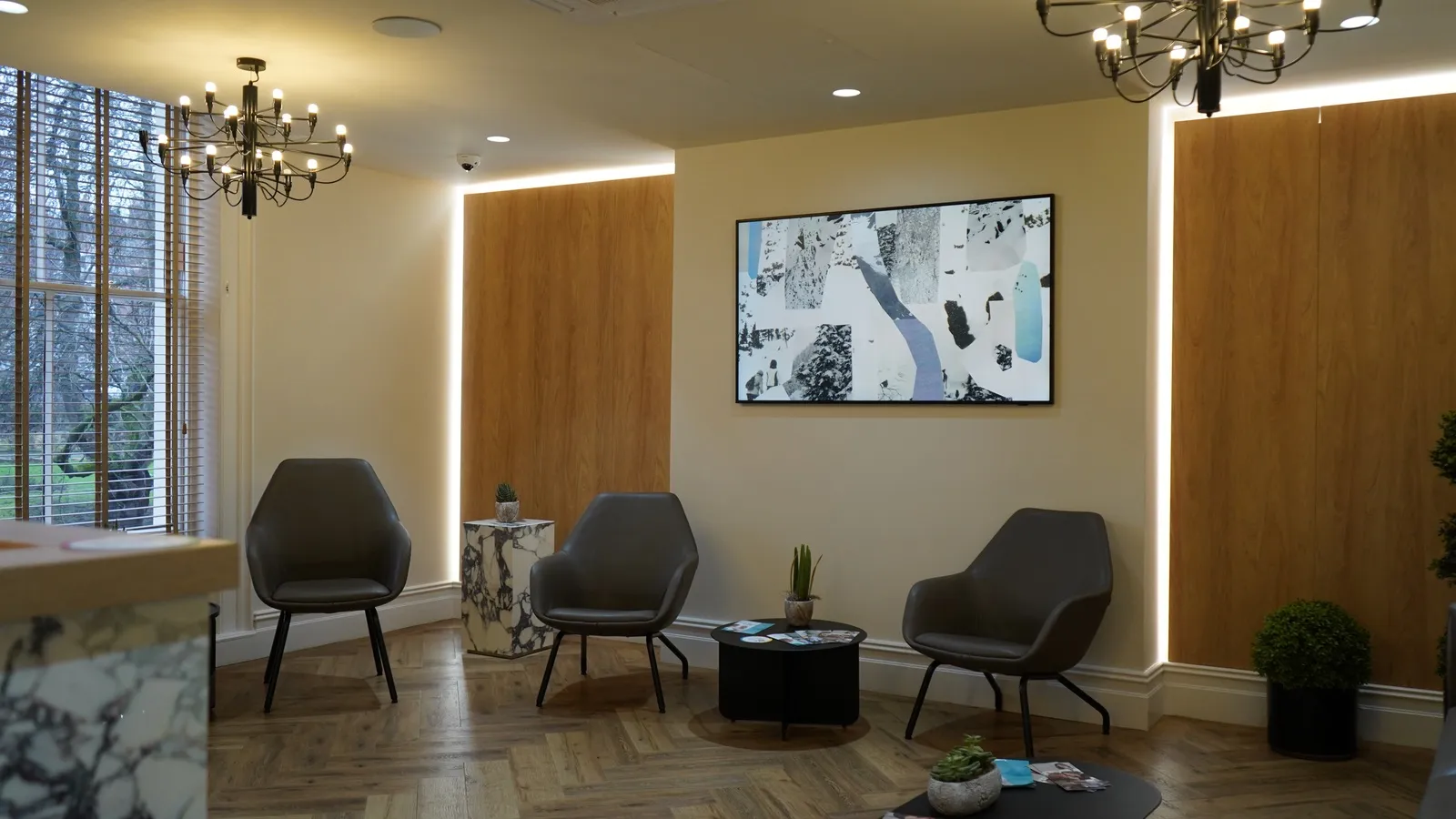
Every veneer, crown and white filling we place at Clarendon is backed by a 12-month structural guarantee — because we want you to feel just as confident in the longevity of your treatment as you do in how it looks. If something isn't performing as it should within that year, we'll put it right at no extra cost.
This covers genuine structural issues with the restoration itself — not accidental damage. It doesn't apply to teeth whitening or hygiene treatments, to a restoration that's been visibly knocked or fractured by an accident or impact, or to cases where we've explained at your consultation that a treatment's longevity can't be guaranteed for clinical reasons and you've chosen to proceed anyway. Outside of those situations, if a covered restoration isn't right, we'll repair or remake it — that's our commitment to the dentistry, not just the finish.
Show more
Show less
Porcelain and composite veneers are covered by our 12-month structural guarantee — genuine peace of mind on a treatment designed to last many years with proper care.
Every crown material we fit — zirconia, E-max, all-ceramic or PFM — is backed by the same 12-month structural guarantee, alongside the precision fit and premium lab work we use as standard.
White fillings typically last 7–10 years with good care, and any that don't perform as they should in the first 12 months are put right at no extra cost.
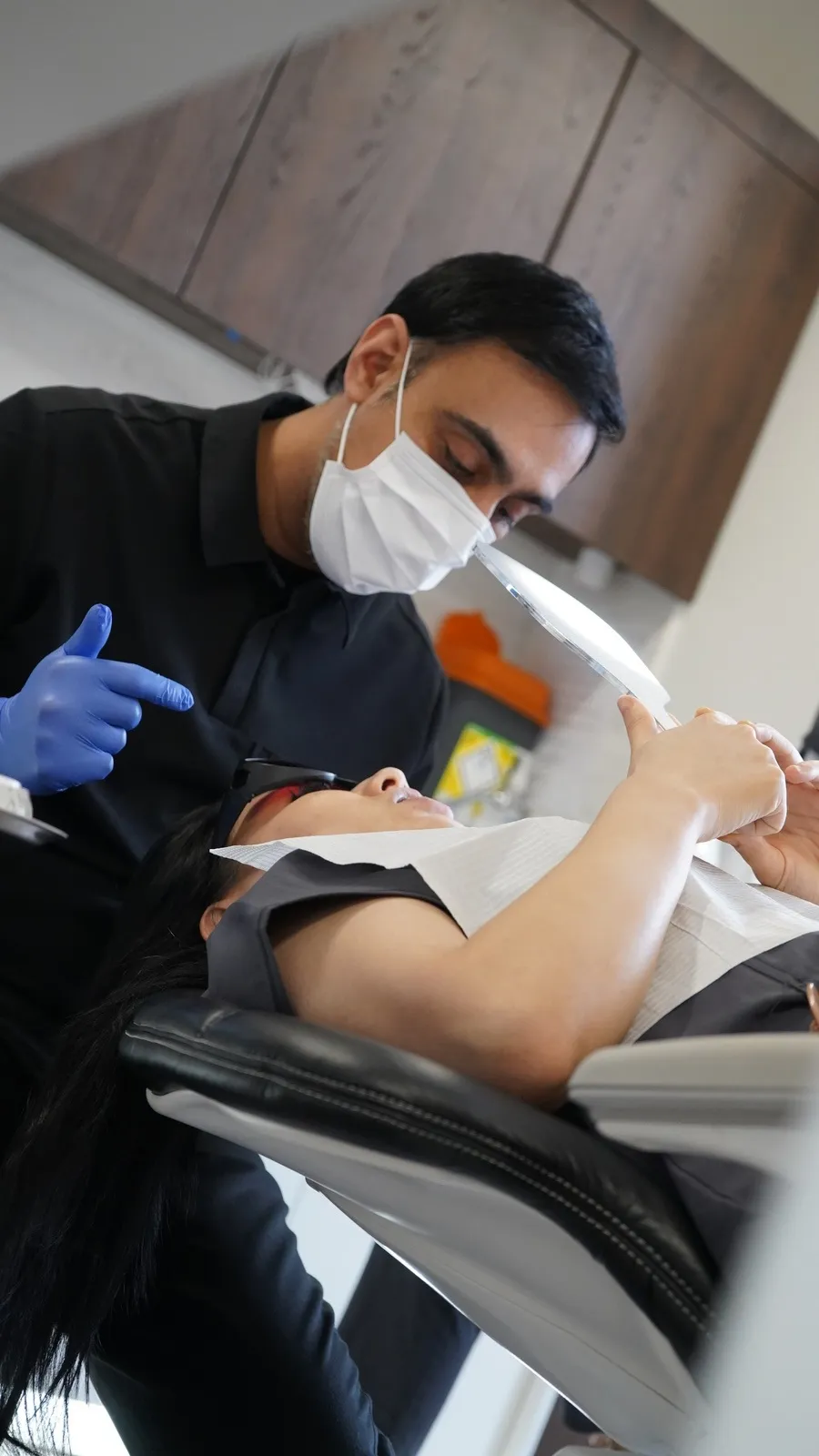
A dental bridge fills the gap left by a missing tooth by anchoring a replacement to the teeth either side — a fixed, natural-looking solution that stays permanently in place.
A traditional bridge consists of artificial teeth (pontics) fused between crowns that fit over the teeth adjacent to the gap (abutment teeth). The abutment teeth are prepared, precise impressions are taken, and a lab crafts the bridge, which is cemented permanently at a second appointment. Other types include Maryland bonded bridges (wings bonded to the back of adjacent teeth, less preparation), cantilever bridges (attached to one neighbouring tooth) and implant-supported bridges (using dental implants as anchors instead of natural teeth).
A well-fitting bridge feels almost identical to natural teeth; a poorly-fitting one causes decay around the edges, gum problems and eventual failure. The difference is precision — careful preparation, accurate impressions, meticulous bite registration and skilled lab work. At Clarendons we partner with a trusted ceramic lab and take the time to get every bridge right, with honest discussions about whether a bridge, implant or other option is genuinely best for you, transparent pricing with interest-free finance, precise digital scanning and responsive aftercare.
Show more
Show less
Unlike dentures, bridges stay permanently in place. You clean them like natural teeth (with a few special techniques) — no removing, no adhesives, no slipping.
A good bridge restores near-normal function — you can eat most foods comfortably and speak clearly, without the adaptation period dentures require.
Modern porcelain and zirconia bridges look completely natural and typically last 10–15 years or more with proper care — established, reliable technology.
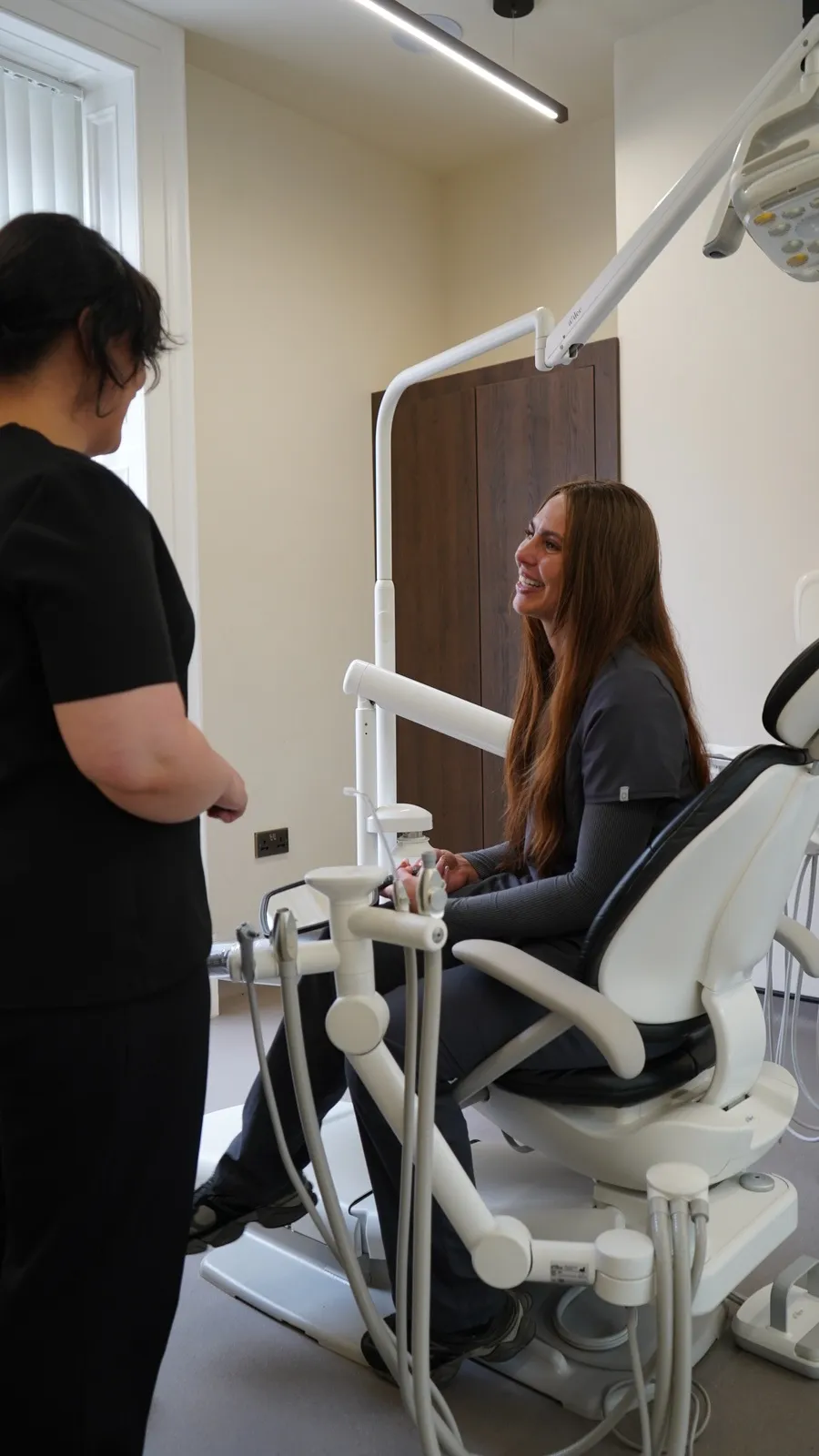
Inlays and onlays are custom-made, lab-crafted restorations that repair larger areas of damage more durably than a standard filling — a conservative middle ground between a filling and a full crown.
Fabricated in a dental lab rather than placed directly in the tooth, an inlay fits within the cusps of a tooth (repairing the central chewing surface) while an onlay extends further to cover one or more damaged or worn cusps. Both are typically made from porcelain (most aesthetic, very durable) or composite (affordable, good for smaller cases) and bonded to the prepared tooth — and because they're lab-crafted under controlled conditions, they're typically stronger and longer-lasting than equivalent-sized direct fillings.
An onlay is often the ideal way to restore a heavily filled or root-treated back tooth: it protects the remaining tooth much like a crown does, but conserves more natural structure, is quicker and easier to prepare, and is usually more affordable than a full crown. Too often, dentists default to full crowns for any larger repair when an inlay or onlay would preserve more natural tooth with equivalent long-term outcomes. At Clarendons we assess every case carefully and recommend the most conservative option that will genuinely serve you — if a crown is truly needed we'll explain why; no over-treatment, no unnecessary tooth reduction. We use modern digital scanning and a premium ceramic lab for every inlay and onlay, with transparent pricing, interest-free finance and responsive aftercare.
Show more
Show less
More conservative than a full crown — we prepare only the damaged area, preserving healthy cusps and walls that a crown would cover entirely.
Lab-crafted from high-strength materials, porcelain inlays and onlays can last 15–20 years — significantly longer than composite fillings of equivalent size.
Porcelain inlays and onlays match natural tooth colour and translucency closely — invisible on back teeth and often indistinguishable from natural tooth structure on front teeth.
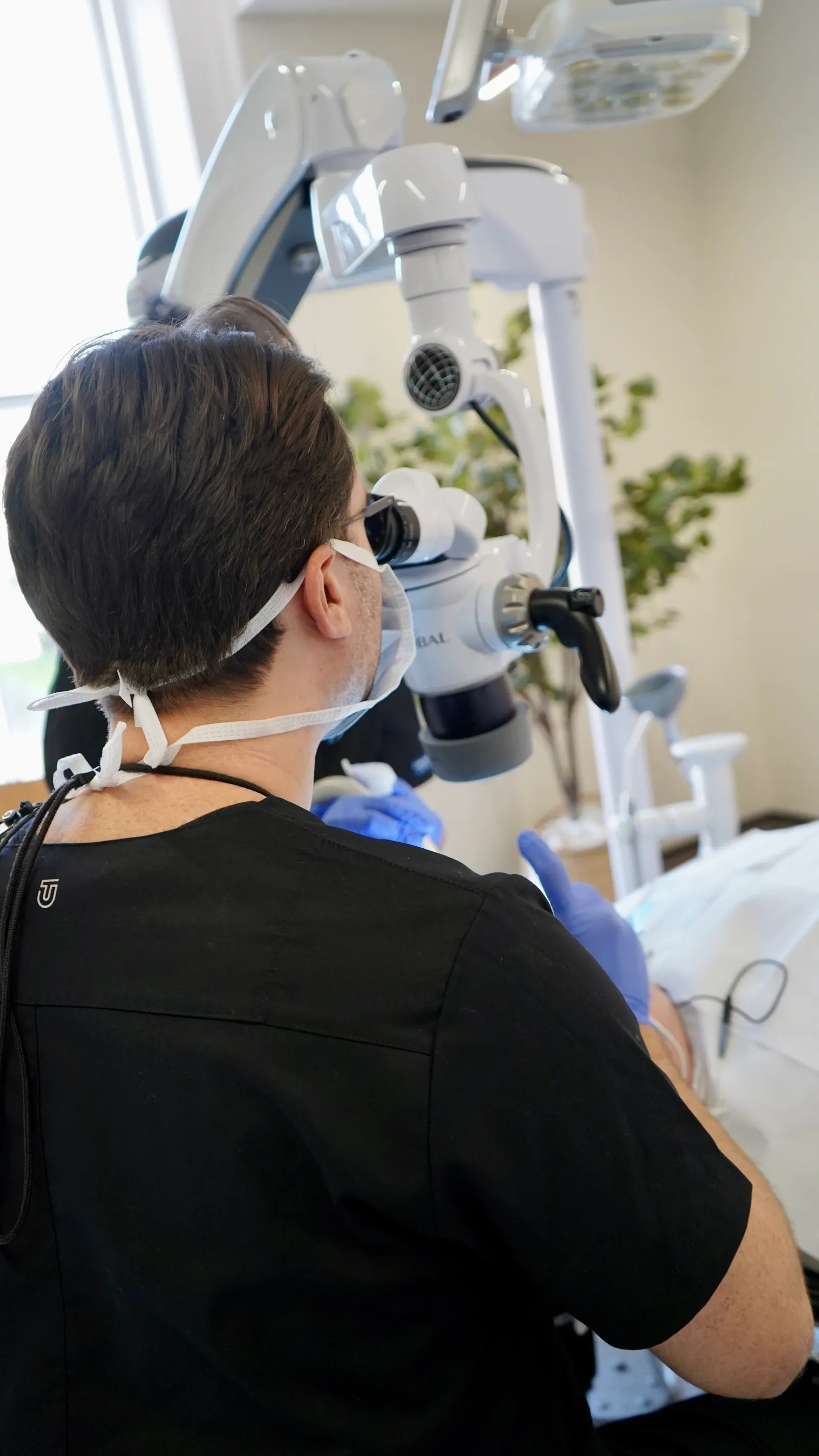
When a tooth is infected but restorable, root canal treatment clears the infection so we can rebuild the tooth — often with a crown afterwards to protect it. It's an important first step in many restorations: save the natural tooth, then restore its strength and appearance.
Modern root canals, done under magnification with precise anaesthesia, are far more comfortable than their reputation — most patients say it's no worse than a filling, with relief usually within 24–48 hours. Because this is a specialist area of its own, the full detail — treatment under the microscope, when to see an endodontist, posts and cores, re-treatment and referrals — lives on our dedicated root canal treatment in Leeds page.
Show more
Show less

THE BRAND PATIENTS TRUST
Had a dental appointment today for my son's filling. Dr Mustafa has seen him and has been a great experience. He was kind, patient, and explained everything.
Asmaa Harfoush
Dr Lucy was amazing with my daughter's first filling. No tears at all.
Emma B.
A big thank you to Mustafa and nurse for doing an amazing job on my root canal treatment. The wow factor I took away from this experience was you both made it so painless.
Darren Smith
Dr Mamdouh was very gentle and kind. No tears at all.
James M.
Dr Christina was very gentle and patient with my daughter.
Oliver H.
Dr Fadi was very good at explaining everything and being kind and gentle. Doing a root canal treatment sounded scary to me but I felt very comfortable.
Αργυρώ Ντάνη
A huge thank you to Fadi and the rest of the team at Clarendon. I booked with for a root canal treatment. The customer care I received was excellent throughout.
Rs
Fadi was an excellent dentist. I was extremely apprehensive prior to my root canal treatment. But he was super informative and reassuring throughout the procedure.
Rhiannon Thackwray
Having recently had a need for a root canal and crown I was referred to see Fadi, I have a fear of needles and the usual dislike of dental work, but Fadi was brilliant.
Sean Killen
I have had two complicated root canal treatments performed by Fadi within the last year - the most recent being this week. I am a very nervous patient and he was absolutely brilliant.
Helen Jackson
I feel very grateful that my teeth ended up in the capable hands of skilled dentist/endodontist Dr Fadi Kreishan at Clarendon Dental Spa. I had two procedures and both were painless and expertly done.
Marian Sommer
Dr Fadi Kreishan was an amazing dentist he treated my infected tooth with a root canal and saved my tooth. He is so professional and talented and that was from someone who has a severe dentist phobia.
Peter Horton
Soumia was fantastic during Inlay procedure making me feel comfortable and at ease throughout the process!
Michael Doherty
Had a tooth that had started to crumble, thanks to Soumia who managed to rebuild it, patience, perfection and determination thank you x
Carol Coleman
Had my first ever filling yesterday and Aisha and the nurse were wonderful. They were reassuring, explained everything both before and during the procedure, and I felt completely comfortable.
Catherine Mcintosh
Aisha Al-Salam was very friendly and reassuring and went above and beyond in salvaging a problematic tooth. A lovely practice with a great team and a wonderful dentist. Thank you so much!
Russell Midgley
I recently visited for a filling on a chipped tooth and a root treatment. Dr Aisha was excellent - very professional, friendly, and made sure I was comfortable throughout the procedures.
Jin Jieh Kok
I was abroad and broke my front two teeth whilst on holiday in Spain in 2014. From first moment Ahmed looked at photos and explained all my options in simple language, putting me at ease about the emergency dental care I received. And since then, any other dentist might have immediately pressured me into going for the high-cost implant options, but Sumaya & Ahmed cemented the work already done to make it stronger & I continue to use the remnants of my existing teeth to this day. I am so grateful to Clarendons & cannot recommend them enough for their honesty and expertise.
Qasim Nawaz
Excellent quality service from dentist Ahmed and nurse Jeni. It has restored my faith in dentists and I now have the smile I have always wanted. The price was very reasonable for the work I had done and I felt as though Ahmed advised me well regarding the options available and associated costs. The practice is very modern and well maintained and the staff are helpful and welcoming.
Dave Madon
I have had a severe phobia of the dentist for over 15 years and the level of service at Clarendon Dental Spa is second to none. Thanks to their fantastic staff I am now attending regular check ups and having treatment, which in the past I avoided as I was so afraid. My recent treatment with Ahmed and Jenni went successfully and I managed to get a filling and clean without anaesthetic. This would not have been possible without their expertise, professionalism and fantastic supportive manner. They really took the time to keep me comfortable and calm. I can't recommend Clarendon Dental Spa enough as they have genuinely transformed my perception of going to the dentist and helped me conquer a phobia, which I never thought possible.
Jo Nassor
Root canal, two words sure to strike fear into the bravest of people. I'm not brave, but not wanting to lose my tooth, and face an implant at £2500, I steadied myself and agreed to the work. Ahmed Al Ani, my dentist of many years, booked me in with the practice specialist for this work, Peter Nixon... After Peter, and his dental assistant, had fitted a temporary capping to the tooth I was referred back to Ahmed, the practice specialist in cosmetic dentistry. This is the Clarendon difference. Everyone has a specialist area and they alone do that work... I'm overjoyed with my new tooth.
Brynley Talbot
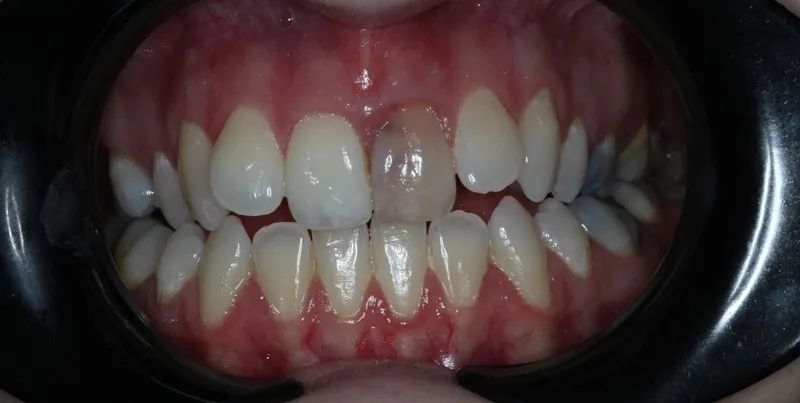
I had a root canal as a child on my front tooth and ever since it's been a horrible stained colour. In some photos it was really noticeable and I was so conscious of it. I looked in to getting a veneer to cover it, however when I went to see Ahmed Al Ani he said I didn't need veneers but internal whitening. It was a really quick procedure (about 10 mins) and the bleach whitened the tooth in 2 days. I'm so happy I didn't need to pay for veneers as my tooth is now the same colour as my other teeth and looks so much better! Ahmed al ani knows so much about teeth whitening, he explained everything in a lot of detail and could answer any questions I had. He was honest about what would work for my teeth and what wouldn't, advising me on how best to save money instead of pushing lots of treatments when they weren't needed. Thanks so much I wouldn't go anywhere for dental treatment after this experience.
Melissa Wootton
“Went for a Dental Crown … nervous at the beginning but was soon put at ease by the excellent and caring Hassan and his nurse Katie … the treatment appears to have been of the highest standard and a great success”
Carole Gordon
“I was looked after by Amber who miraculously repaired my broken tooth … I thought the service and kindness offered to me was absolutely five-star!”
David Hall
“I had a filling done on one of my back teeth … everyone was very friendly and the treatment was very professional”
Carsten Z
Dr Ahmed Al-Ani
July 4, 2026