.svg)
Next
Next
Cosmetic Dentistry
Design the smile that defines you

Dental Veneers
Dental veneers are ultra-thin, custom-crafted ceramic or composite covers bonded to the front of your teeth — transforming shape, shade and symmetry in one of cosmetic dentistry’s most dramatic upgrades. At Clarendons, we design every veneer around your natural features: face shape, skin tone, smile line. The result is a smile that looks unmistakably like yours — just noticeably, confidently better.

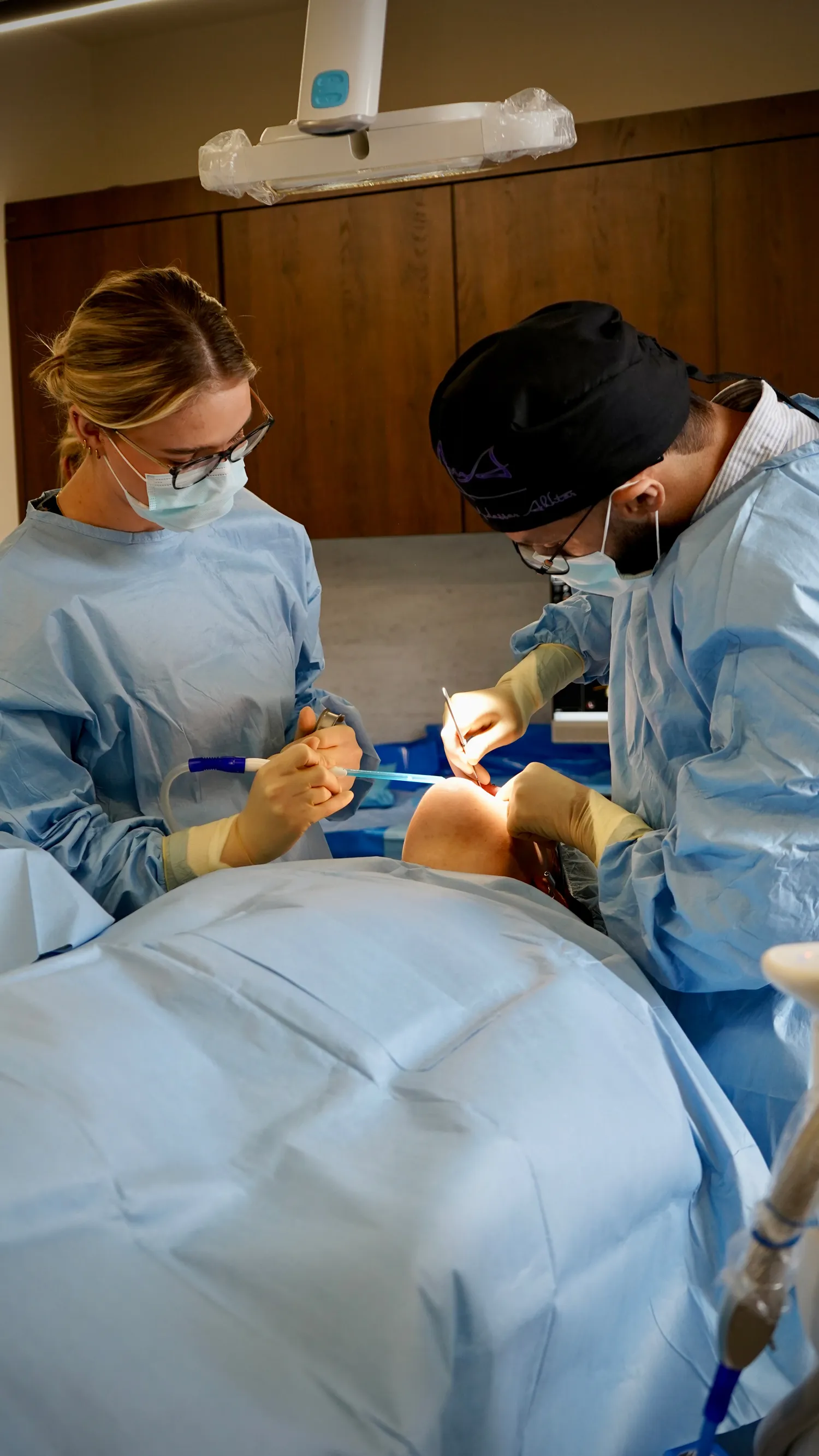

Porcelain for ultimate durability and lifelike aesthetics. Composite for a more affordable, reversible option. Minimal-prep techniques wherever possible — preserving as much natural tooth structure as we can. In our award-winning clinic in Leeds city centre, veneer treatment is a carefully planned, collaborative journey — not a rushed transaction.

What are dental veneers?
Veneers are thin shells bonded to the front of teeth to correct cosmetic concerns — chips, worn edges, discolouration, gaps, minor misalignment, small or irregular teeth. Porcelain veneers are custom-made in a lab from high-grade ceramic, bonded permanently to the tooth after minimal preparation.
Composite veneers are sculpted directly onto the tooth by the dentist, using tooth-coloured composite resin. Both deliver dramatic aesthetic change. Porcelain is more durable and stain-resistant; composite is more affordable and reversible. Treatment typically involves 2–3 appointments over several weeks.
Show more
Show less

Features and benefits
No cookie-cutter smiles. Every veneer is designed around your individual features — face shape, skin tone, smile line — for a result that looks natural and suits you entirely.
Where possible, we use minimal-prep approaches that preserve as much natural enamel as possible. Your tooth structure is conserved; your veneer bonds beautifully.
Premium porcelain veneers, properly fitted and maintained, can last 15 years or more. A genuinely long-term investment in your smile.


The Clarendon's Difference
Great veneers shouldn’t look perfect. They should look alive — with subtle shade variation, realistic translucency, and texture that catches light like natural enamel. At Clarendons, our cosmetic dentists work closely with our trusted ceramic lab to deliver veneers that pass the closest inspection. We use 3D digital smile design, try-in appointments where appropriate, and meticulous bonding techniques.
Our award-winning clinic in Leeds city centre makes the veneer process as considered as the result. Proper consultations. Digital previews before anything permanent. Sedation available for nervous patients. Transparent pricing with interest-free finance. And we’ll always recommend composite over porcelain if that’s genuinely the better option — not the more profitable one.
Show more
Show less

THE BRAND PATIENTS TRUST

How much do dental veneers cost?
Porcelain veneers are priced per tooth, reflecting the custom lab work and premium materials involved. Composite veneers are a more affordable alternative, also priced per tooth. A full smile veneer makeover (typically 6–8 teeth for the visible smile line, or 10–20 for a more comprehensive transformation) is a significant investment. At your consultation we’ll provide a clear itemised quote. Interest-free finance available to spread the cost over 12–60 months.
We are a credit broker, not a lender.
Your smile transformation starts here. Explore what makes Clarendons different — from the team behind the work to the journeys that inspire it.