.svg)
Next
Next
Teeth Whitening
Say goodbye to white spots

Icon White Spot Removal
Chalky white spots on your front teeth? The legacy of braces, fluorosis from childhood, or early-stage decay that never progressed? Icon resin infiltration makes them disappear — without any drilling, without anaesthetic, in a single 45-minute appointment. It’s one of dentistry’s best-kept secrets, and for the right patient, it’s genuinely transformative.


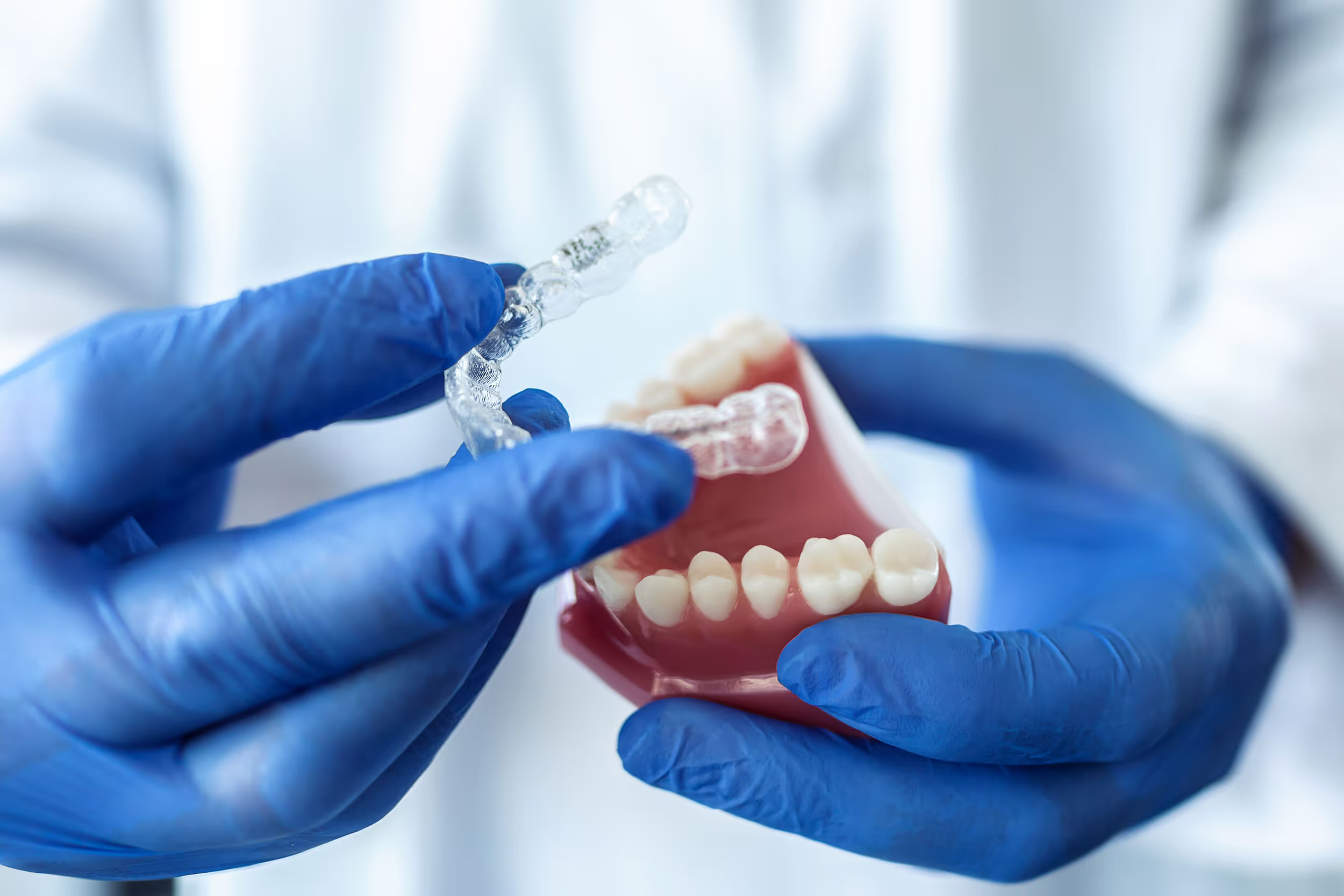
Icon works by filling the porous areas beneath white spot lesions with a tooth-coloured resin, restoring the optical properties of the enamel so the spots blend seamlessly. No injections. No downtime. Just a visibly more even smile by the end of your appointment.
What is Icon white spot removal?
Icon is a specialist resin infiltration system designed to treat white spot lesions — those chalky, opaque patches on teeth caused by demineralisation. Common causes include post-orthodontic demineralisation (after braces), dental fluorosis (excess fluoride during tooth development), and very early-stage decay.
Icon works by first etching the tooth surface with a mild acid to open the pores, drying the area thoroughly, then infiltrating a low-viscosity resin into the porous lesion. The resin sets with a curing light, filling the porous enamel and restoring a natural, even appearance. No drilling. No enamel removal. No injections.
Show more
Show less
Features and benefits
A truly micro-invasive treatment. No anaesthetic needed, no enamel removed. The perfect answer for white spots in patients who’d prefer not to veneer or bond over healthy teeth.
Most Icon treatments are completed in 45–60 minutes. Visible improvement in one visit — sometimes dramatic transformation, depending on the depth of the lesions.
Unlike veneers or crowns, Icon treats the lesion inside the tooth without altering the external structure. Your natural tooth is conserved entirely.


The Clarendon's Difference
Icon isn’t a magic cure-all — it works beautifully on the right kinds of white spots and less so on others. At Clarendons, we assess your specific lesions carefully: their cause, depth and location. For superficial demineralisation after braces, Icon often delivers transformative results. For deeper fluorosis or thick white patches, it may not be the right answer — and we’ll tell you honestly, rather than selling treatment that won’t deliver.
Our award-winning clinic in Leeds city centre is trained in the Icon technique and delivers it with care. Calming environment, no injections needed, and transparent pricing. If Icon is right for you, it’s one of the most satisfying treatments in cosmetic dentistry — a completely reversible, minimally-invasive solution to a cosmetic problem that’s bothered you for years.
Show more
Show less

THE BRAND PATIENTS TRUST
How much does Icon white spot removal cost?
Icon treatment is priced per treated tooth or per appointment, depending on the number and complexity of lesions. It’s significantly more affordable than veneers or composite bonding as an alternative. We’ll provide a clear quote at your consultation, including assessment of whether Icon is suitable for your white spots. Flexible payment options available.
We are a credit broker, not a lender.
Your smile transformation starts here. Explore what makes Clarendons different — from the team behind the work to the journeys that inspire it.