.svg)
Next
Next

Periodontal Treatment
Bleeding gums aren’t normal. They’re a warning sign of gum disease — and left untreated, gum disease is the leading cause of adult tooth loss in the UK. It’s also linked to heart disease, diabetes and other serious health conditions. The good news: gum disease is treatable, often reversible in its early stages, and always manageable with the right care. At Clarendons, our periodontal treatment programme gets gum health back on track quickly and professionally.

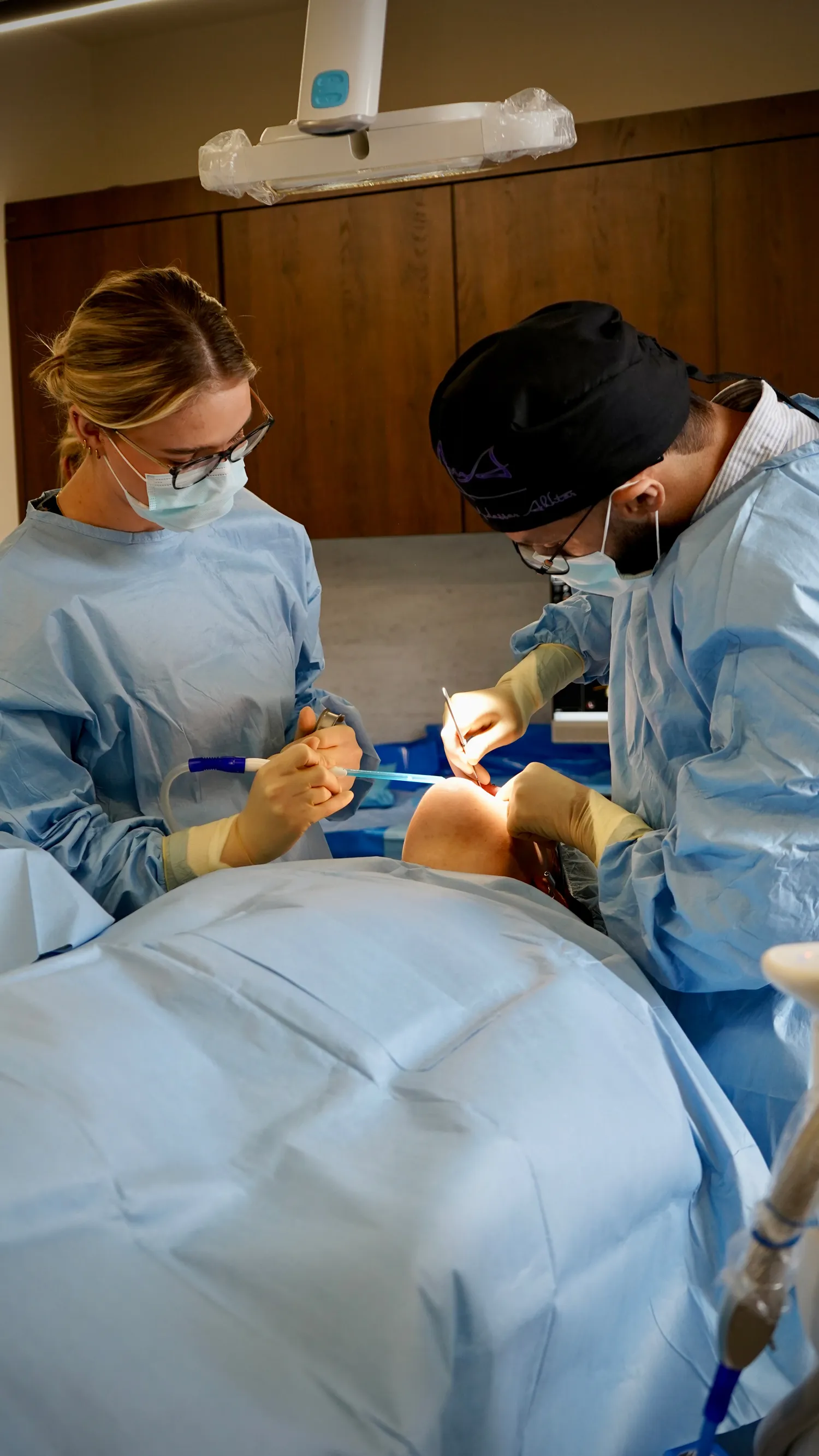

From early gingivitis (inflammation) to more advanced periodontitis (with bone loss), we tailor treatment to your specific stage and severity. Deep cleaning below the gumline. Detailed home care guidance. Regular maintenance to prevent recurrence. In our calming Leeds city centre clinic, with sedation available for nervous patients.

What is periodontal treatment?
Periodontal treatment addresses gum disease — a common but serious condition where plaque bacteria cause inflammation, damage and eventually bone loss around teeth. Early-stage gum disease (gingivitis) causes redness, swelling and bleeding.
Advanced gum disease (periodontitis) involves deeper bacterial infection, formation of pockets between teeth and gums, and gradual destruction of the bone supporting teeth.
Treatment typically involves deep cleaning below the gumline (called ‘scaling and root planing’) to remove hardened tartar and bacteria from root surfaces. Local anaesthetic keeps the procedure comfortable. Ongoing hygiene visits maintain the improvement and prevent recurrence.
Show more
Show less

Features and benefits
Caught early — while it’s still gingivitis — gum disease can be completely reversed with professional cleaning and improved home care. Don’t ignore bleeding gums.
Even advanced gum disease can be stopped in its tracks with proper treatment. Bone loss that’s already happened can’t be reversed, but further loss can be prevented — saving your teeth.
Gum disease is linked to heart disease, diabetes, stroke and complications in pregnancy. Treating it properly has benefits far beyond your mouth.


The Clarendon's Difference
Gum disease treatment is more than just ‘a deeper clean.’ It requires proper diagnosis (including charting of gum pocket depths and X-rays to assess bone loss), careful treatment planning, skilled execution, and ongoing maintenance to prevent recurrence. At Clarendons, our hygienists and dentists work together to deliver the full periodontal care pathway — from first diagnosis through treatment to long-term maintenance.
Our award-winning clinic in Leeds city centre handles periodontal treatment with kindness and care. Local anaesthetic ensures comfort during deep cleaning. Airflow technology makes subsequent hygiene visits as pleasant as possible. Sedation is available for nervous patients or complex cases. And clear, achievable home care guidance empowers you to maintain your results between visits. Gum disease is manageable — we’ll show you how.
Show more
Show less

THE BRAND PATIENTS TRUST

How much does periodontal treatment cost?
Periodontal treatment is priced based on severity and number of appointments required. Early-stage cases may need just one extended hygiene visit; advanced cases typically require 2–4 deep-cleaning sessions spread across quadrants. At your consultation, we’ll provide a full, itemised treatment plan with clear pricing. Ongoing maintenance hygiene visits are priced per appointment.
We are a credit broker, not a lender.
Your smile transformation starts here. Explore what makes Clarendons different — from the team behind the work to the journeys that inspire it.